What is the use of UV chamber in microbiology lab?
UV chambers serve microbiology laboratories through dual mechanisms: sterilization and accelerated material aging testing. In sterilization applications, ultraviolet radiation at 254nm wavelengths penetrates bacterial cell membranes, disrupting DNA replication and eliminating pathogenic organisms on equipment surfaces and culture media. Complementarily, UV aging chambers expose polymeric materials, coatings, and pharmaceutical packaging to controlled UV-A (315-400nm) and UV-B (280-315nm) wavelengths, simulating years of environmental exposure within weeks. LIB Industry's UV aging chamber models deliver precise irradiance control (0.3-20 W/m²), programmable temperature cycling (ambient to 90°C), and humidity management (≥95% RH) meeting ASTM G154 and ISO 4892-3 standards, enabling comprehensive material durability assessment and microbial inactivation validation simultaneously.
Understanding UV Chambers and Their Functionality
UV Light Spectrum and Germicidal Mechanisms
Ultraviolet radiation spans wavelengths from 10 nanometers to 400 nanometers, subdividing into distinct spectral regions with differentiated biological effects. Germicidal UV radiation concentrates at 254 nanometers, penetrating bacterial cell membranes and damaging double-stranded DNA through thymine dimer formation, preventing cellular replication and causing microorganism death. This wavelength range proves maximally effective against common laboratory contaminants including Staphylococcus aureus, Bacillus subtilis, and Escherichia coli.
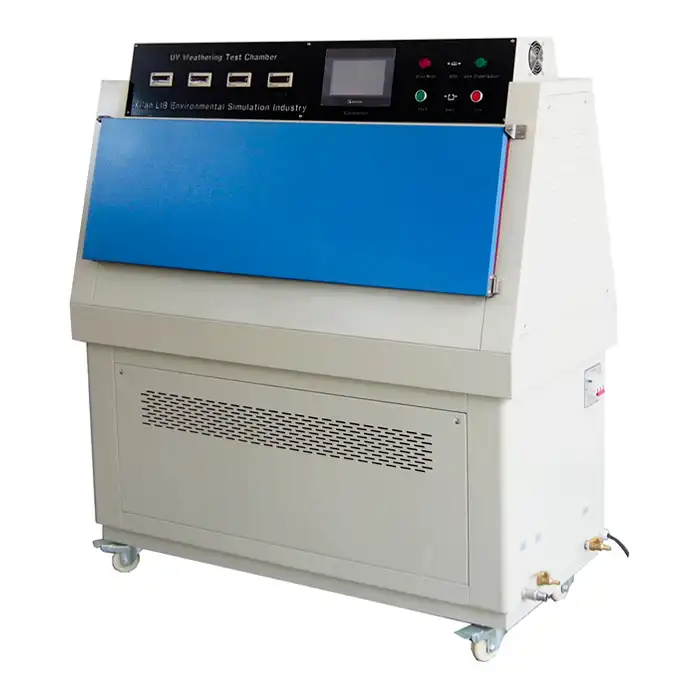
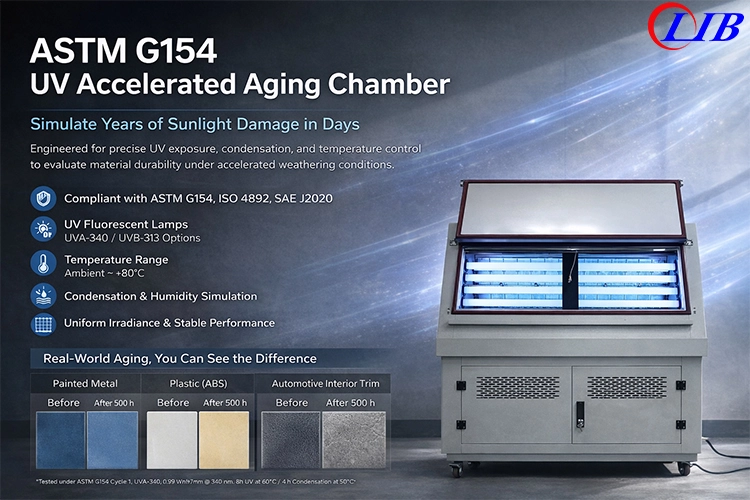
UV-A radiation (315-400 nanometers) penetrates deeper into materials without direct germicidal effects, instead causing photochemical degradation through free radical generation within polymer matrices. UV-B radiation (280-315 nanometers) occupies intermediate effectiveness, exhibiting both germicidal properties and material degradation acceleration. LIB Industry's UV aging chamber employs selectable fluorescent UV lamps (UVA 340nm and UVB 313nm configurations), enabling laboratories to conduct specialized sterilization protocols or material weathering simulations through lamp selection.
Chamber Design Architecture and Environmental Control
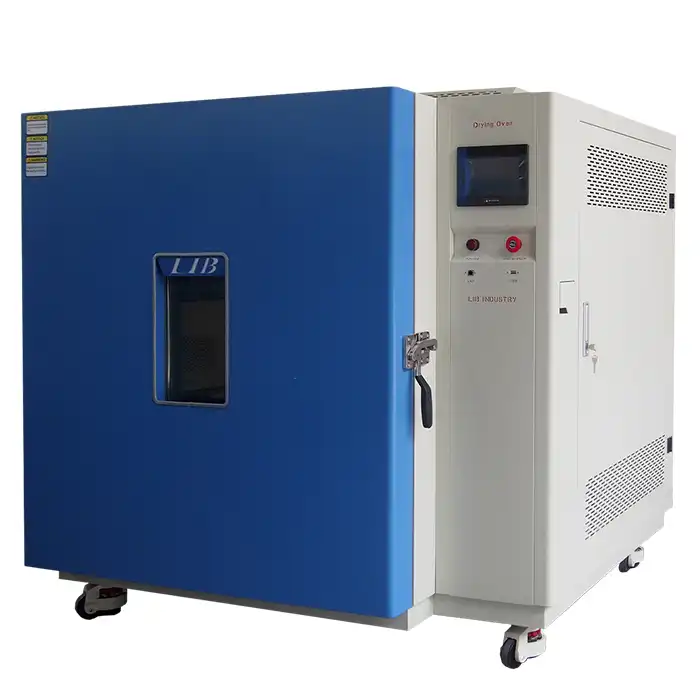
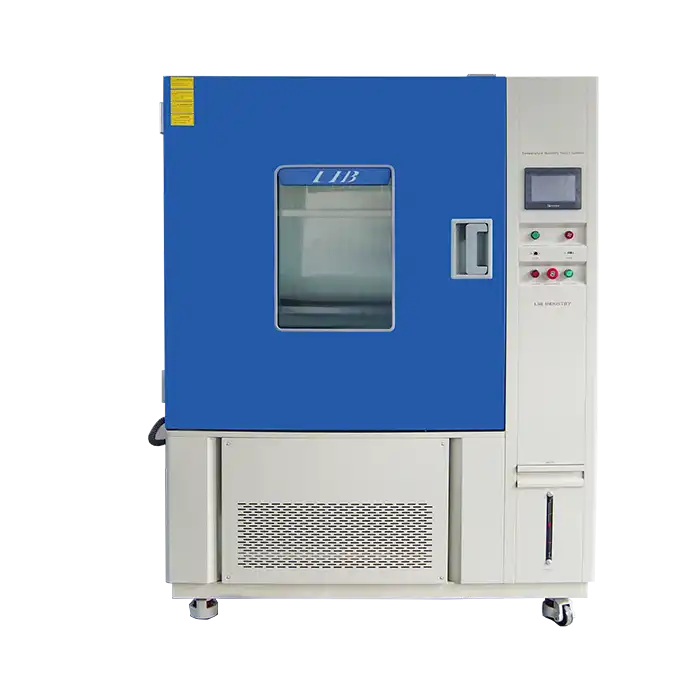
The enclosed chamber construction confines UV radiation preventing operator exposure while maintaining controlled environmental conditions essential for reproducible testing. LIB Industry's UV-SI-260 model features SUS304 stainless steel interiors (450×1170×500mm internal dimensions) supporting 56 specimens (75×150mm dimensions each) arranged vertically on adjustable racks. Eight 40-watt fluorescent UV lamps positioned 50 millimeters from specimen surfaces deliver uniform irradiance distribution across all sample positions, eliminating hot spots and shadowing artifacts.
Advanced thermal management systems regulate chamber temperature from ambient conditions to 90°C with ±2°C precision, enabling examination of temperature-dependent material degradation mechanisms. Proportional-integral-derivative (PID) controllers automatically modulate heating and cooling elements maintaining programmed temperature setpoints throughout extended test cycles. Water spray systems integrate sophisticated humidification achieving ≥95% relative humidity alongside condensation cycling that mimics natural weather patterns.
Programmable Control Systems and Data Management
The programmable color LCD touchscreen controller incorporating Ethernet connectivity enables remote monitoring and data logging across networked laboratory facilities. Operators program complex environmental profiles combining UV exposure intervals, dark periods allowing thermal recovery, temperature ramps simulating diurnal cycling, and humidity fluctuations replicating seasonal weather patterns. Integration capabilities facilitate data export to spreadsheet applications and statistical analysis software, automating report generation for regulatory submissions.
|
Chamber Component |
Function |
Specification |
|
Fluorescent UV Lamps |
Irradiation source |
8 × 40W, selectable UVA/UVB |
|
Temperature Control |
Thermal management |
Ambient to 90°C ±2°C |
|
Humidity System |
Moisture control |
≥95% RH with spray cycles |
|
Irradiance Control |
Light intensity |
0.3-20 W/m² adjustable |
|
Controller |
Automation |
Programmable LCD touchscreen |
Applications of UV Chambers in Microbiology Research
Material Sterilization and Contamination Prevention
Microbiology laboratories employ UV aging chambers protecting culture media, incubation vessels, and instrument surfaces from pathogenic contamination. Exposure to germicidal UV radiation (254 nanometers) for 15-30 minute intervals effectively eliminates vegetative bacteria, fungi, and viruses from laboratory surfaces, reducing contamination risks in critical research operations. Many laboratories integrate UV chambers as pre-sterilization equipment preparing surfaces before autoclaving, reducing microbial bioburden and improving overall sterilization reliability.
Cabinet-mounted UV lamps irradiate biological safety cabinets' interior surfaces, inactivating airborne microorganisms and reducing cross-contamination between consecutive experiments. Laboratory managers utilize scheduled UV exposure protocols during non-operational hours, enabling overnight sterilization without disrupting daytime research activities. This practice proves particularly valuable in microbiology teaching laboratories where multiple student groups utilize shared equipment sequentially.
Pharmaceutical Packaging and Container Validation
Pharmaceutical manufacturers employ UV aging chambers validating container integrity under simulated environmental conditions preceding long-term storage and distribution. Plastic vials, syringes, and blister packs undergo accelerated UV exposure testing identifying photodegradation mechanisms that compromise pharmaceutical stability or container integrity. UV-induced polymer chain scission reduces material tensile strength, increases brittleness, and generates extractable compounds migrating into pharmaceutical formulations.
LIB Industry's chambers simulate both direct sunlight exposure (through appropriate UV-A/UV-B wavelength combinations) and indirect window-transmitted light conditions affecting pharmaceutical products during retail display. Testing protocols establish acceptable light exposure limits, guiding packaging material selection and product storage recommendations. Regulatory agencies including FDA and European Medicines Agency recognize standardized UV aging protocols as validation evidence for pharmaceutical container suitability assessments.
Microbial Resistance Studies and Evolutionary Biology
Research laboratories investigate UV-induced mutations, survival mechanisms, and evolutionary adaptation in microorganism populations through controlled UV exposure experiments. Mutant generation requires precise irradiance levels and exposure durations producing reproducible mutation frequencies - capabilities that standard UV lamps cannot provide. LIB Industry's irradiance control system (0.3-20 W/m² adjustable range) enables researchers to establish dose-response relationships identifying UV exposure thresholds triggering specific genetic changes.
Evolutionary biologists examine whether successive microorganism generations develop enhanced UV resistance through natural selection mechanisms. Programmable exposure protocols enable cyclic testing where organisms survive initial UV exposure, reproduce, then undergo subsequent UV challenges. This iterative methodology demonstrates adaptation mechanisms and provides insights into microbial survival strategies relevant to environmental remediation and industrial microbiology applications.
Optical Material Assessment and Clarity Retention
Microscopy objectives, coverslips, and optical instruments require transparency preservation throughout operational lifespan. UV aging chambers evaluate optical material degradation mechanisms including refractive index changes, surface crazing, and discoloration reducing optical performance. Researchers quantify light transmittance degradation using spectrophotometric measurement pre- and post-UV exposure, documenting performance trajectories.
Medical device manufacturers validate optical component durability for instruments exposed to operating room lighting, indirect sunlight through windows, and sterilization lamp radiation. Accelerated UV aging testing expedites validation timelines from years to months, enabling rapid product development cycles. LIB Industry's equipment accommodates specialized specimen holders securing fragile optical components, maintaining precise positioning throughout extended exposure intervals.
Advantages of UV Chambers in Microbiology Labs
Controlled Environmental Simulation and Reproducibility
Laboratory environments prove inherently variable - ambient lighting fluctuates with weather patterns and operational hours, temperature drifts seasonally and diurnally, humidity varies with climate control system efficiency. These environmental variables compromise experimental reproducibility essential for rigorous scientific investigation. UV aging chambers eliminate these variables through enclosed construction isolating specimens from external environmental influences, enabling researchers to establish causative relationships between UV exposure and observed material degradation or microbial responses.
Programmable control systems enable identical protocol replication across multiple research groups, institutions, and temporal periods, facilitating data comparison and meta-analysis. This standardization proves particularly valuable for multi-institutional collaborative research and regulatory validation requiring demonstrated reproducibility across independent laboratories. LIB Industry's equipment incorporates automated data logging capturing environmental parameters throughout test cycles, providing documentation that satisfies regulatory audit requirements and scientific publication standards.
Accelerated Testing Timelines and Research Efficiency
Natural outdoor weathering requires years of exposure generating representative degradation data - timelines incompatible with product development cycles and research funding periods. UV aging chambers compress years of environmental exposure into weeks through elevated irradiance levels (up to 20 W/m²), accelerated temperature cycling, and continuous humidity stress. This acceleration enables rapid material screening, formulation optimization, and packaging validation supporting commercial timelines.
The acceleration factor (ratio of equivalent natural exposure to chamber exposure) typically ranges from 5:1 to 10:1 depending on material type and test methodology, meaning 1000 hours of chamber exposure approximates 5-10 years of natural weathering. This condensed timeline accelerates research progress, reduces development costs, and enables more rapid commercialization of improved materials. Pharmaceutical companies validate container performance within months rather than years, supporting product launch schedules and market responsiveness.
Comprehensive Data Generation and Regulatory Compliance
Advanced UV aging chambers generate granular environmental and material performance data satisfying regulatory documentation requirements. Programmable controllers automatically capture temperature profiles, humidity variations, irradiance levels, and specimen exposure durations with timestamp precision. This objective data documentation supersedes subjective visual assessment, providing quantifiable evidence satisfying FDA, ICH, and European regulatory authority standards.
LIB Industry's equipment compliance with ASTM G154, ISO 4892-3, and ASTM D4329 international standards ensures recognized validity of generated data across regulatory jurisdictions. Standardized test protocols enable direct comparison with competitor materials, published reference data, and historical performance benchmarks. This standardization facilitates regulatory submissions by providing data demonstrating equivalence to previously approved materials or formulations, accelerating approval timelines.
|
Regulatory Standard |
Focus Area |
Application |
|
ASTM G154 |
Non-metallic material weathering |
Plastics, coatings, elastomers |
|
ISO 4892-3 |
Plastic material UV exposure |
Laboratory and commercial assessment |
|
ASTM D4329 |
Accelerated weathering for coatings |
Paint systems and protective finishes |
Material Diversity and Specimen Capacity
The UV-SI-260 UV aging chamber accommodates 56 specimens simultaneously, enabling efficient comparative evaluation of competing formulations, suppliers, or processing conditions. Batch testing substantially reduces per-unit testing costs compared to sequential single-specimen evaluation. Research teams optimize material formulations through systematic variation of additives, pigments, or processing parameters, evaluating entire experimental matrices within single chamber campaigns.
LIB Industry's customization capabilities extend specimen holder configurations accommodating non-standard geometries - medical devices, optical components, textile samples, or electronic assemblies. Specialized mounting hardware maintains consistent specimen positioning and orientation throughout extended exposure intervals, ensuring uniform light exposure regardless of material shape. This flexibility eliminates the need for multiple specialized testing chambers, reducing capital equipment expenses and facility space requirements.
Pharmaceutical and Food Industry Applications
Stability testing protocols established by pharmaceutical regulatory agencies require UV exposure assessment for products expected to experience ambient lighting conditions during manufacturing, storage, or retail display. Photostability testing examines whether pharmaceutical actives undergo photochemical degradation, whether inactive ingredients extract into products, and whether container materials maintain integrity. These investigations require precisely controlled UV conditions - capabilities central to LIB Industry's equipment design.
Food packaging manufacturers evaluate migration of printing inks, adhesives, and polymeric materials into foodstuffs when packages expose to store lighting or outdoor transport conditions. Accelerated UV aging identifies potential food safety concerns enabling rapid corrective formulation adjustments before commercial production. This preventative approach protects consumer health and maintains brand reputation through rigorous pre-market validation.
FAQ
What wavelength UV radiation should I use for microbiology specimen sterilization?
Germicidal UV radiation peaks at 254 nanometers, most effectively inactivating bacterial DNA and preventing microbial replication. However, LIB Industry's UV aging chambers primarily employ UVA (340nm) and UVB (313nm) wavelengths for material weathering simulation rather than sterilization applications. Specialized germicidal UV cabinets operating at 254nm wavelengths serve sterilization purposes more effectively than broad-spectrum aging chambers.
How do temperature and humidity variations affect UV-induced material degradation?
Temperature elevations accelerate photochemical reaction rates, while humidity exposure facilitates hydrolysis mechanisms where water molecules penetrate polymeric materials and break chemical bonds. Synergistic temperature-humidity-UV interactions produce more severe degradation than UV exposure alone, accurately simulating real-world environmental stressing. LIB Industry's programmable control systems enable independent optimization of these parameters matching specific material vulnerabilities.
Can UV aging chamber results predict actual outdoor product performance accurately?
Correlation exists between accelerated chamber testing and natural outdoor performance, though geographic location and climate conditions influence acceleration factors significantly. Tropical climates with intense UV radiation and high humidity require lower acceleration factors than temperate regions. Researchers establish location-specific correlation factors comparing chamber results with field data, enabling accurate performance predictions adapted to target market conditions.
Elevate Your Laboratory Testing Capabilities with LIB Industry
LIB Industry manufactures advanced UV aging chambers engineered specifically for microbiology laboratories requiring sterilization, material weathering assessment, and pharmaceutical validation capabilities. As a leading manufacturer and supplier of environmental testing equipment, we deliver turn-key solutions encompassing equipment design, production, installation, operator training, and comprehensive technical support. Our systems comply with international standards (ASTM G154, ISO 4892-3) while delivering precise environmental control and reliable performance. Contact our technical team at ellen@lib-industry.com to explore customized UV chamber configurations matching your laboratory's unique requirements.