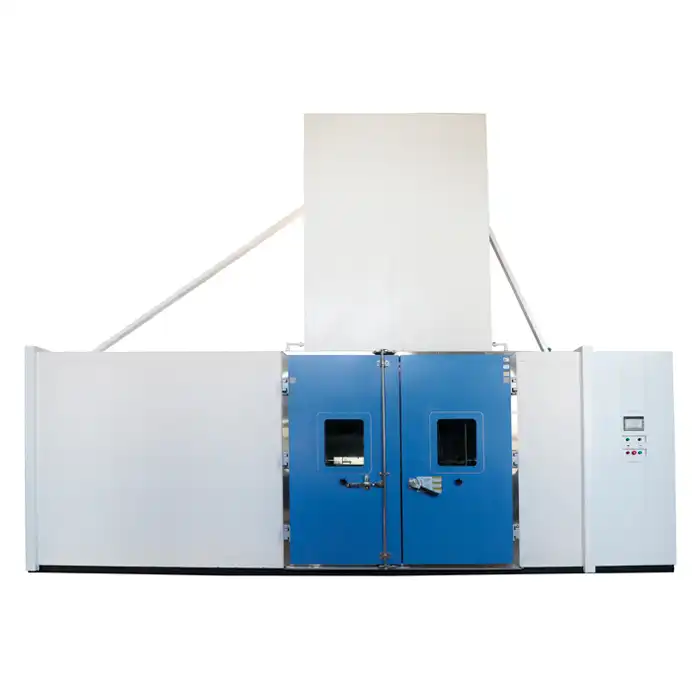
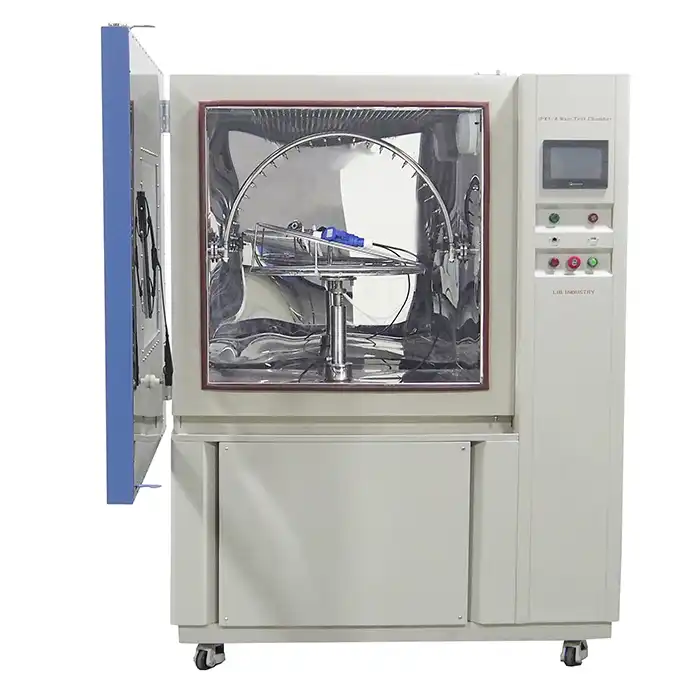
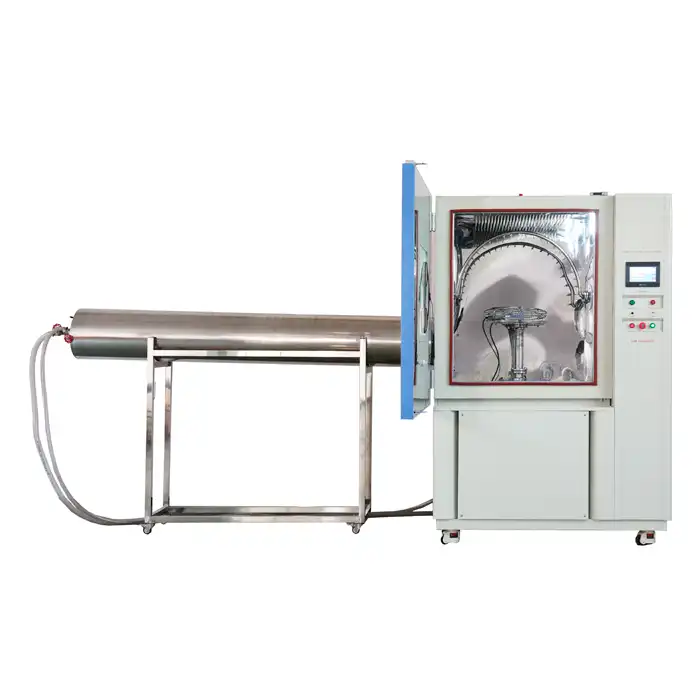
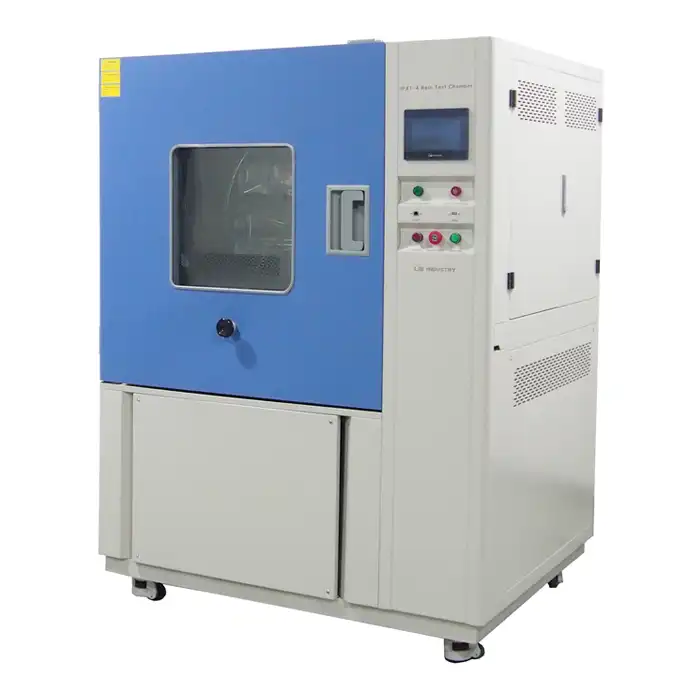
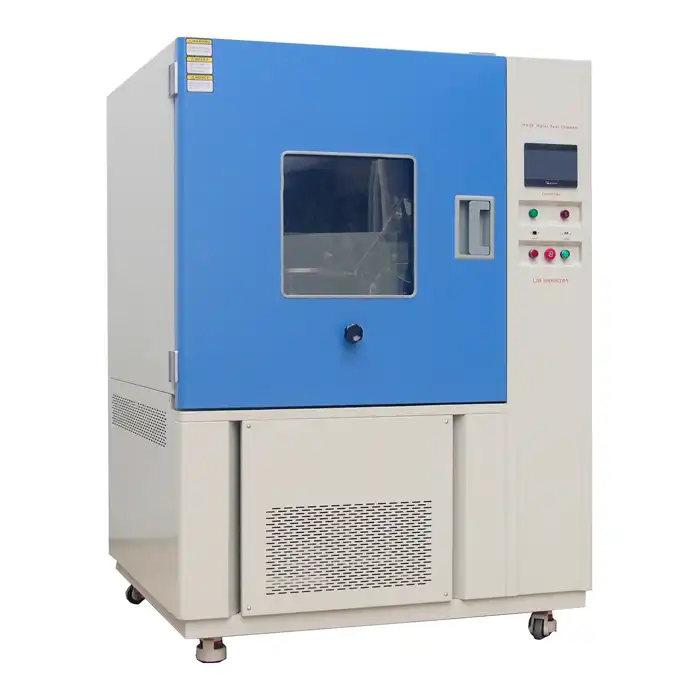
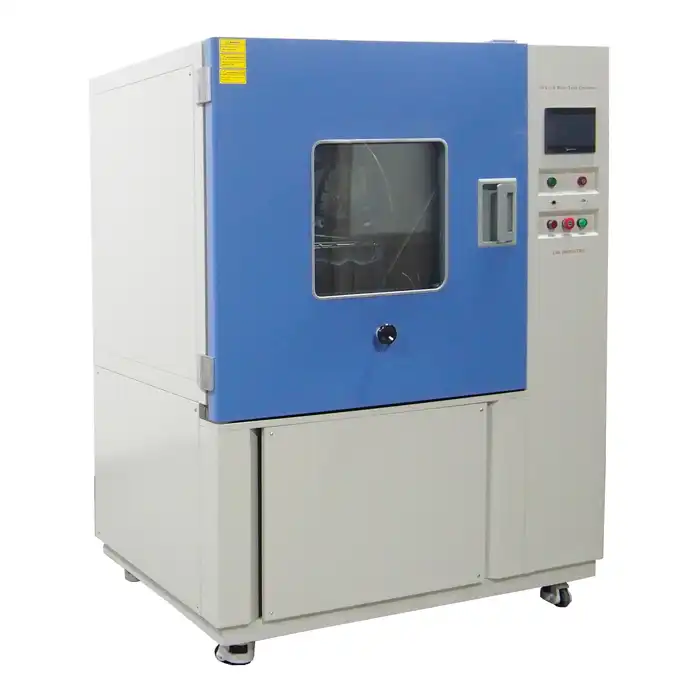
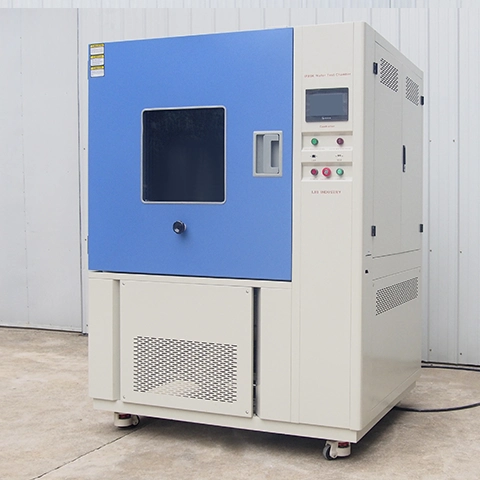
Splash Water Test Chamber
Name: Splash Water Test Chamber
Model: RD-1200C
Capacity: 800L/1000L/1500L/2000L and more
Standard: IEC 60529, ISO20653
Drip Tray Size: 800*800
Water System: Water Circulation System;
Splash Water Test Chamber (IPX1–IPX4): Waterproof Rating Testing Solution
Can your product survive dripping water, tilted dripping, spraying, or splashing from any direction? LIB Splash Water Test Chamber is engineered to verify IPX1, IPX2, IPX3, and IPX4 ingress protection ratings in a single piece of equipment, following IEC 60529, GB/T 4208, GB/T 4942.1, and ISO 20653. It simulates real-world exposure to vertical drip, angled drip, directed spray, and omnidirectional splash — helping you confirm enclosure, seal, and gasket performance before products reach the field.
Depending on the rating being tested, the chamber uses either an oscillating tube assembly (for IPX1/IPX2) or a fixed/handheld spray nozzle system on a rotating turntable (for IPX3/IPX4). Water flow rate, oscillation or spray angle, nozzle distance, and test duration are all precisely controlled and monitored, so results are consistent and traceable.
| IPX Level | Water Direction / Angle | Description |
|---|---|---|
| IPX1 | Vertical, 0° | Vertical dripping water |
| IPX2 | Vertical, 15° tilt (4 directions) | Dripping water with enclosure tilted |
| IPX3 | Spray, up to 60° from vertical | Spraying water |
| IPX4 | Splash, up to 180° | Splashing water from any direction |
Product Parameter
Model | R-800C | R-1200C |
Internal Dimensions (mm) | 900*950*950 | 1300*1350*1370 |
Overall Dimensions (mm) | 1180*1420*1920 | 1540*1820*2200 |
Useful Volume (L) | 810 | 2400 |
Oscillating Tube Radius | 400mm | 600mm |
Drip Tray Size | 600*600 | 1000*1000 |
Spraying Hole Diameter | φ0.4mm | |
Hole Spacing | 50 mm | |
Swing Angle of Oscillating Tube | 0 ~ ±180° (Adjustable) | |
Turntable Rotation Speed | 1r/min (Adjustable speed) | |
Water Pressure Control | Flow meter | |
Controller | Programmable color LCD touch screen controller, Ethernet connection | |
Water supply system | Water tank, booster pump, Automatic water supply, Water purification system | |
Safety Device | Over-temperature Protection; Over-current Protection; Water Shortage Protection; Earth leakage Protection; Phase Sequence Protection | |
Exterior Material | Steel Plate with protective coating | |
Interior Material | SUS304 stainless steel | |
Observation Window | Double layer insulating glass with wiper | |
Product Details
|
|
|
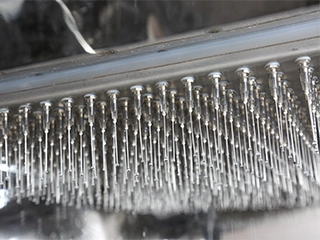
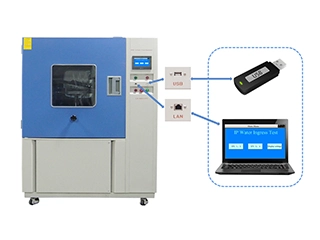
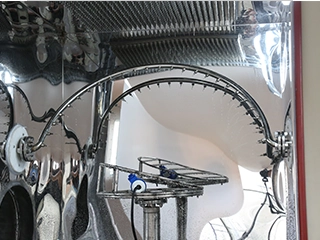
Drip Tray The drip tray is made of stainless steel Drip holes are evenly distributed | PC Link Ethernet connect to PC for easy operation Match to the local laboratory software USB to download data | Oscillating Tube Oscillating tube is made of stainless steel. Oscillating tube range can be reached to ±45°, ±60°, ±90°, ±180° |
|
|
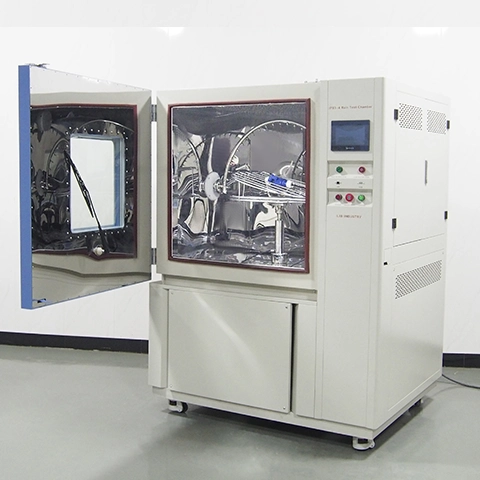
Key Structural Components of Splash Water Test Chamber
· SUS304 Test Chamber: Corrosion-resistant stainless steel construction for long-term reliability
· Oscillating Tube Assembly: For accurate IPX1/IPX2 drip testing
· Spray Nozzle System: Adjustable nozzles for IPX3/IPX4 spray and splash testing
· Rotating Turntable: Ensures uniform, all-direction water exposure
· Water Flow Control System: Precise regulation of flow rate and pressure per standard requirements
· Transparent Viewing Window: Monitor test progress without interrupting the cycle
· Interior Lighting: Clear visibility of sample behavior during testing
· Drainage & Water Recirculation System: Efficient water management between test cycles
Frequently Asked Questions
Q: What's the difference between IPX1, IPX2, IPX3, and IPX4?
A: They differ in water direction and coverage: IPX1 is vertical dripping only, IPX2 adds a 15° tilt in four directions, IPX3 is directed spray up to 60° from vertical, and IPX4 is splashing from any direction up to 180°.
Q: Can I test multiple IPX levels with one chamber?
A: Yes. The chamber can be configured with both the oscillating tube assembly and the spray nozzle system, allowing you to test IPX1 through IPX4 on the same equipment.
Q: How long does a typical test cycle take?
A: Duration depends on the standard and IPX level being tested — typically 5–10 minutes per test, per the relevant standard's requirements.
Q: Do you provide testing protocol development?
A: Yes. Our team assists with protocol creation based on applicable standards and your specific validation requirements.
Q: What maintenance does the chamber require?
A: Regular nozzle and drainage system cleaning, periodic flow-rate calibration. We provide detailed maintenance schedules and training with every installation.