Vibration Test Chambers: How to Match Shaker Size, Payload and Chamber Fit?
Key Takeaways
Size the shaker by total moving mass, not specimen weight. Force = mass × acceleration, and the moving mass includes the fixture, head expander and armature.
Maximum load is a structural limit, not a test level. A part near the 500 kg limit leaves little force for acceleration.
Specimen and fixture must fit the table with clearance for airflow and shaker stroke.
The fixture is part of the system. Keep it light and stiff, with no resonance inside the test band.
Get every key figure in writing and verify it with a reference-load acceptance test.
About LIB Industry Vibration Test Chambers
LIB Industry's vibration test chambers combine an electrodynamic shaker with a temperature and humidity chamber, so you can vibrate a specimen while it is heated, cooled or humidified. They are used to qualify electronics, battery packs and assemblies under combined stress, and they can be integrated with altitude, pressure or corrosion testing on request.
Key specifications
|
Parameter |
LIB specification |
|---|---|
|
Rated force |
1000 kgf |
|
Frequency range |
2–4000 Hz |
|
Armature diameter |
φ240 mm |
|
Maximum load |
500 kg |
|
Head expander |
600 × 600 mm |
|
Horizontal slide table |
600 × 600 mm |
|
Test directions |
Vertical and horizontal |
|
Temperature range |
−50 °C to +150 °C |
|
Temperature fluctuation / deviation |
±0.5 °C / ±2.0 °C |
|
Humidity deviation |
±2.5% RH |
|
Sensors |
PT100 Class A |
|
Air circulation |
Centrifugal fan |
|
Refrigeration |
Bitzer or Bock compressors |
|
Controllers |
RKC or Siemens |
|
Shaker interface |
Patented sealing system with air-drying system |
|
Blower |
4 kW, with muffler |
|
|
|
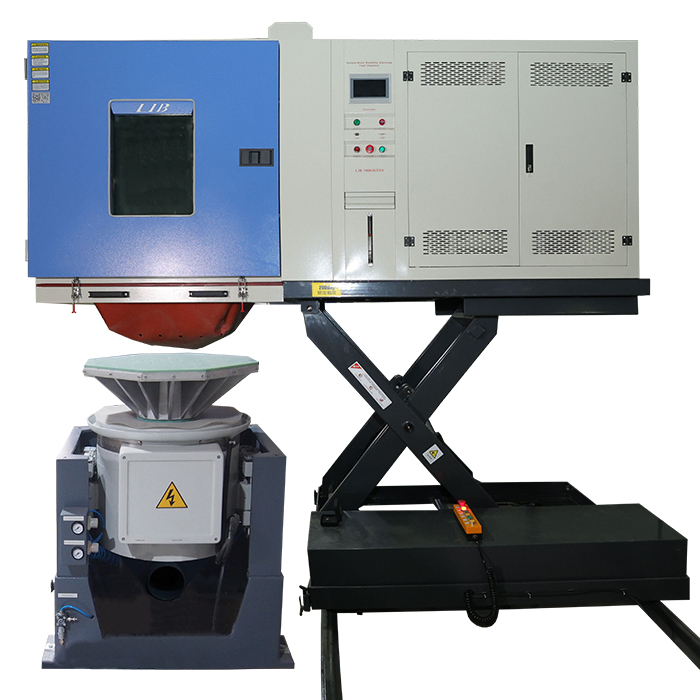
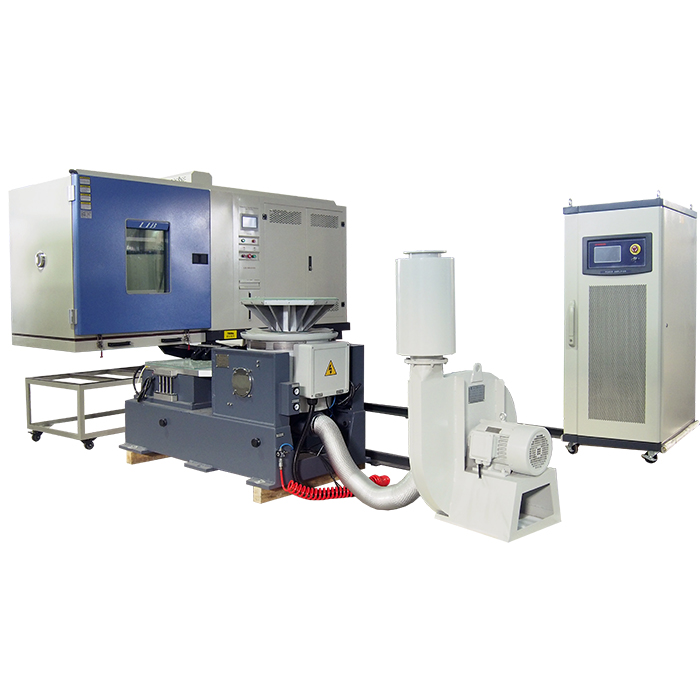
Formats: table-top, floor-standing and walk-in, in standard and custom designs.
Quality, support and service
|
Certifications |
ISO 9001, CE; third-party testing by SGS and TÜV |
|
Warranty |
3 years, then lifetime service |
|
Support |
24/7 technical support |
|
Service network |
29 agents and service centers, including Malaysia, Canada, the United Kingdom and the United States |
The sections below explain how to check that these figures fit your own specimen.
Shaker Size: Force, Mass and Acceleration
A shaker is sized by several figures together: rated force, frequency range, armature diameter and stroke. Reading one number alone leads to wrong choices.
The core rule is force = total moving mass × acceleration. The moving mass includes the specimen, fixture, bolts, adapter plates, head expander and the armature itself.
Illustrative example: with 1000 kgf of rated force and a total moving mass of 100 kg, the theoretical ceiling is about 10 g. Real tests must stay below that, so ask the supplier to calculate achievable acceleration for your heaviest setup and to leave a margin.
Payload: Rated Load vs. Usable Test Level
 LIB lists a maximum load of 500 kg. That number tells you how much weight the table can carry. It does not tell you how hard that weight can be shaken. As the load approaches the limit, less force remains for acceleration, so the usable test level drops.
Check force first, then treat maximum load as a structural limit.
Two more payload effects matter:
Center of gravity. Tall or off-center specimens create overturning moments that load the shaker bearings and distort the input. Place the center of gravity as low and central as the part allows. Ask the supplier for the maximum allowable moment, since it is not part of the published data.
Resonance and control. Heavy loads lower the resonant frequency and can narrow the usable band. Closed-loop control compensates, but it cannot exceed the limits of the amplifier and shaker. Lighter loads and shorter fixtures improve control.
|
|
|
 |
|
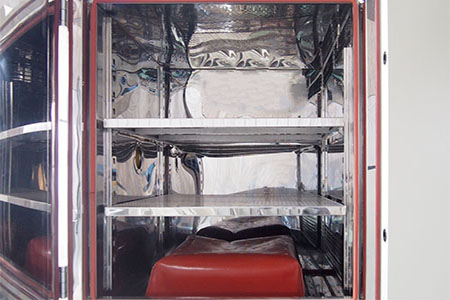
SUS 304 Climatic Workroom |
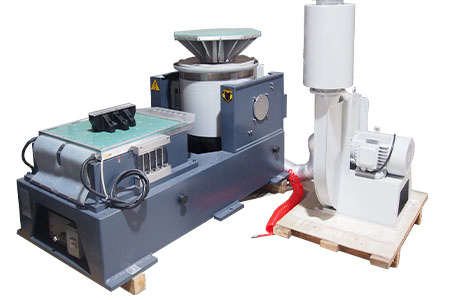
Versatile Vibration Testing |
Smart Control & Monitoring System |
Matching Specimen Size to the Vibration Test Chamber
The specimen and fixture must fit the table with room left for airflow. LIB offers a 600 × 600 mm head expander for vertical testing and a 600 × 600 mm horizontal slide table. Compare these with your footprint, including fixture flanges.
Leave clearance on all sides and above. A specimen that touches the chamber walls blocks airflow and makes temperature harder to hold uniform, even with a centrifugal fan. Vertical testing also needs headroom for the table stroke.
|
Specimen scale |
Likely format |
What to confirm |
|---|---|---|
|
Small boards, sensors |
Table-top |
Table area, cable access |
|
Mid-size units |
Floor-standing |
Vertical stroke clearance |
|
Large assemblies (battery packs, racks) |
Custom or walk-in |
Floor load, door size |
Workroom dimensions are not published for each model, so request drawings before you order.
Fixture Weight, Stiffness and Mounting
Weight. Fixture mass adds to the moving mass and reduces available acceleration. Aluminum and magnesium are common because they are stiff for their weight, but your temperature range affects the choice. Add up the fixture, bolts and adapter plates before sizing the shaker.
Stiffness. A flexible fixture amplifies or attenuates the input at certain frequencies, so the part sees a different profile than the controller reports. Run a low-level accelerometer check on the fixture before the real test.
Mounting and thermal limits. Mount the specimen with the same screws, torque and interface used in service. Fixture materials and fasteners must also hold up across the chamber's −50 °C to +150 °C range without loosening.
How Temperature Humidity Vibration Chamber Fit Affects Accuracy and Stability
Airflow and uniformity. LIB specifies ±0.5 °C fluctuation, ±2.0 °C deviation and ±2.5% RH humidity deviation, measured with PT100 Class A sensors. An oversized specimen or heavy fixture can block airflow, so place sensors on the part as well as in the air.
Sealing. The shaker-to-chamber interface is a common leak and moisture point. LIB uses a patented interface seal and an air-drying system. Ask any supplier how their seal handles your table stroke across temperature extremes.
Control stability. A shaker running near its limits is less stable than one with headroom. Choose a system that exceeds your highest planned level.
Vibration Test Chamber Selection Checklist
Build your brief. Record specimen weight and size, center of gravity, fixture mass, test axes, profile type, temperature and humidity ranges, dwell times and total test duration. Add altitude, pressure or corrosion needs if the test is combined.
Ask each supplier for these figures in writing:
|
Item |
What to ask |
|---|---|
|
Achievable acceleration |
Calculated for your total moving mass |
|
Frequency range |
Usable band with your load |
|
Table and workroom |
Dimensions and clearances |
|
Climate performance |
Range and ramp rate with load |
|
Protection |
Behavior on shaker fault or specimen failure |
|
Standards |
Editions the system is verified against |
Confirm site needs. Shaker systems need a strong floor, adequate power and a blower with muffler (LIB lists 4 kW). Check noise, drainage and door clearance.
Common Fit Mistakes
Sizing by specimen weight alone. Forgetting the fixture, head expander and armature leaves you with a shaker that cannot reach the required level.
Ignoring future parts. A chamber sized for today's smallest part may not take next year's largest. Weigh the cost of oversizing against the cost of replacement.
Accepting unconfirmed figures. If two documents show different values, request one confirmed number in writing and verify it with a reference-load acceptance test.
FAQ
How do I know if a shaker is large enough? Add the specimen, fixture, head expander and armature masses, then multiply by your peak acceleration. Compare the result with the rated force and keep a margin. Ask the supplier to check your calculation.
Does maximum load equal usable test level? No. Maximum load is a structural limit. Check force against total moving mass separately, because heavy loads reduce achievable acceleration.
Why leave clearance around the specimen? Air must circulate for even temperature and humidity, and vertical tests need room for stroke. Overcrowded loads block airflow and reduce control accuracy.
What temperature range do LIB vibration chambers cover? The specification table lists −50 °C to +150 °C, with ±0.5 °C fluctuation and ±2.0 °C deviation. Confirm the achieved range under your load.
Can LIB build a chamber for large assemblies? Yes. LIB offers custom and walk-in designs for large specimens such as battery packs and racks. Send your dimensions and weight for a proposal.
Get a Tailored Quotation
Ready to set up your test? LIB Industry designs vibration test chambers and provides turnkey environmental testing solutions. Send your specimen dimensions and weight, fixture details, test profile and standards to ellen@lib-industry.com, and our engineers will recommend a configuration and send a clear quote.