Thermal Cycling Equipment vs. Thermal Shock Chamber: What's the Difference?
When it comes to product reliability testing, thermal cycling equipment and thermal shock chambers are often discussed together. Although both tests expose products to changing temperatures, they use different temperature transition rates and are designed to evaluate different types of thermal stress.
Understanding the difference helps manufacturers choose the right test equipment for their products and avoid using a test method that does not match the actual application conditions.
Need thermal cycling equipment for your product reliability testing? Contact LIB Industry for a suitable configuration and quotation within 24 hours.
What Is Thermal Cycling Equipment? Understanding Gradual Temperature Changes
Thermal cycling is a controlled process in which a product or material is gradually exposed to alternating high and low temperatures over an extended period. This test simulates environmental conditions where temperature changes occur progressively and repeatedly.
The purpose is to identify long-term effects such as fatigue, cracking, delamination, and material weakening caused by repeated thermal expansion and contraction.
Thermal cycling is commonly used in industries such as aerospace, automotive, and electronics, where products may experience fluctuating temperatures during operation or storage. By using thermal cycling equipment, manufacturers can evaluate product durability and identify potential weaknesses before products are put into service.
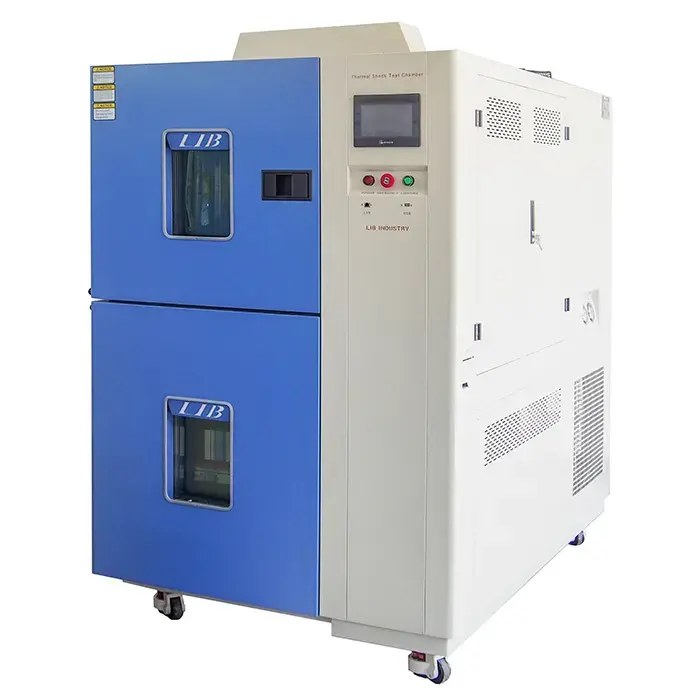
What Is Thermal Shock? The Impact of Rapid Temperature Swings with Thermal Cycling Equipment
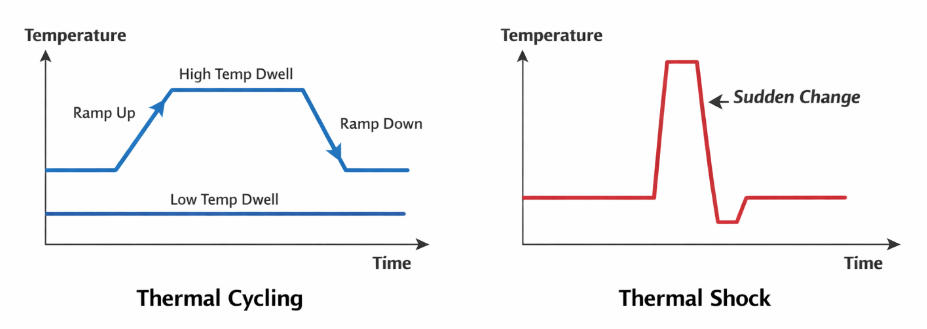
Thermal shock testing involves subjecting a product to sudden and extreme temperature changes. Unlike thermal cycling, where temperature transitions are controlled and gradual, thermal shock exposes the specimen to rapid changes between hot and cold environments.
This rapid transition can produce significant thermal stress and may result in failures such as cracking, warping, or delamination in temperature-sensitive materials.
Thermal shock testing is particularly useful for products that may experience sudden temperature changes in real-world applications, including electronic components, medical devices, and military equipment. The test evaluates whether a product can withstand abrupt thermal stress without compromising its functionality or structural integrity.
Key Differences Between Thermal Cycling Equipment and Thermal Shock Testing
_1773978265968.jpg "blog-1-1") Although thermal cycling equipment and thermal shock chambers both involve temperature variation, their test methods and purposes are different.
Although thermal cycling equipment and thermal shock chambers both involve temperature variation, their test methods and purposes are different.
Rate of Temperature Change: Thermal cycling uses controlled temperature transitions that may take significantly longer, while thermal shock is designed for much faster transitions between hot and cold conditions.
Purpose: Thermal cycling evaluates durability under repeated temperature changes and helps identify long-term fatigue and material stress. Thermal shock focuses on a product's ability to withstand sudden and severe thermal stress.
Test Duration: Thermal cycling tests may run for extended periods, including multiple cycles over days or weeks. Thermal shock tests are generally shorter but expose products to more abrupt temperature transitions.
Applications: Thermal cycling is widely used for automotive, aerospace, electronics, and other products exposed to repeated temperature changes. Thermal shock is more suitable where products must withstand sudden environmental temperature changes.
The correct choice therefore depends on the temperature profile your product is expected to experience during actual use.
Choosing the Right Test: When to Use Thermal Cycling Equipment vs. Thermal Shock
Selecting between thermal cycling equipment and thermal shock testing depends on the intended application and the environmental conditions your product will encounter.
Thermal Cycling: Use thermal cycling when you need to evaluate long-term durability under repeated temperature changes. For example, automotive components may experience temperature variations during vehicle operation and exposure to different climates. Repeated thermal cycling can help identify fatigue, stress fractures, and other weaknesses that develop over time.
Thermal Shock: Thermal shock is more suitable when a product must withstand sudden and extreme temperature transitions. Electronic or aerospace components, for example, may encounter rapid changes between significantly different temperature environments. Thermal shock testing can help determine whether the product can tolerate these abrupt transitions without failure.
In some applications, both tests may be necessary. An aerospace component, for example, could require thermal cycling to evaluate durability under repeated temperature changes and thermal shock testing to evaluate its resistance to sudden thermal stress.
LIB Indusry Thermal Cycling Equipment
At LIB Industry, we provide thermal cycling equipment designed for controlled and repeatable temperature cycling tests. The equipment can be configured according to the required temperature range, test volume, temperature transition rate, and application.
Key capabilities include:
Wide Temperature Range: Chambers can be configured for different high- and low-temperature test conditions.
High Precision and Stability: Advanced sensors and control systems help maintain stable and repeatable test conditions.
Flexible Configurations: Different chamber sizes and configurations are available for automotive components, electronics, aerospace parts, and other products.
Application-Based Solutions: Test conditions can be configured according to the customer's specimen size, temperature profile, cycling requirements, and applicable standards.
LIB Industry also provides installation, commissioning, operator training, factory calibration, and after-sales technical support. The standard service package includes a 3-Year Manufacturer Warranty / 36 months and lifetime technical support, with spare-parts and remote assistance available for long-term operation.
Related Temperature Testing Equipment
|
|
|
|
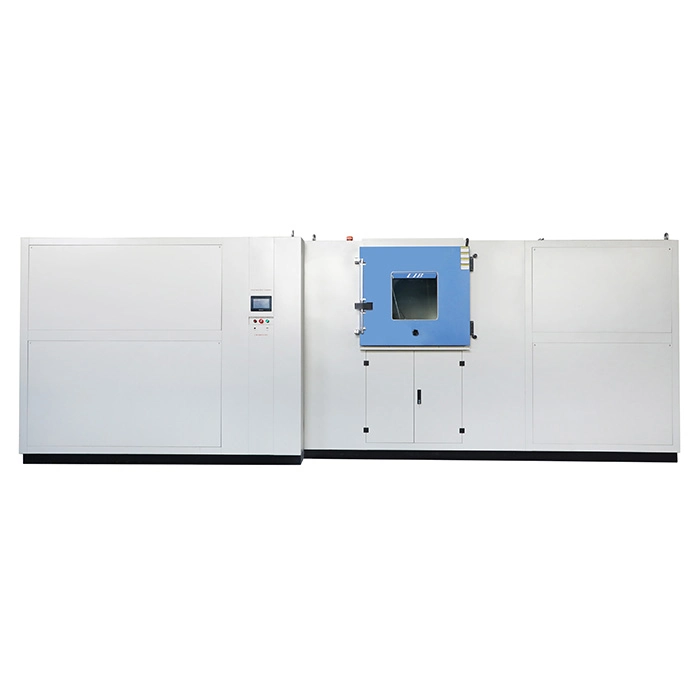
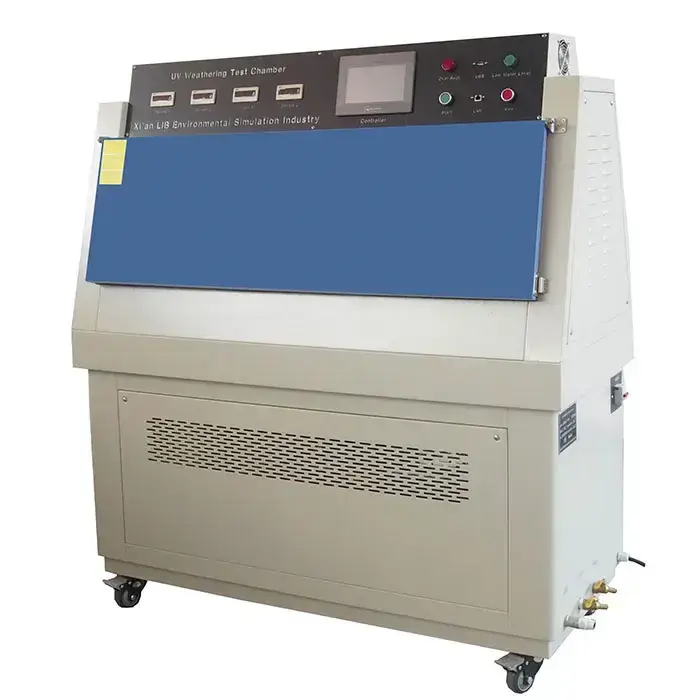
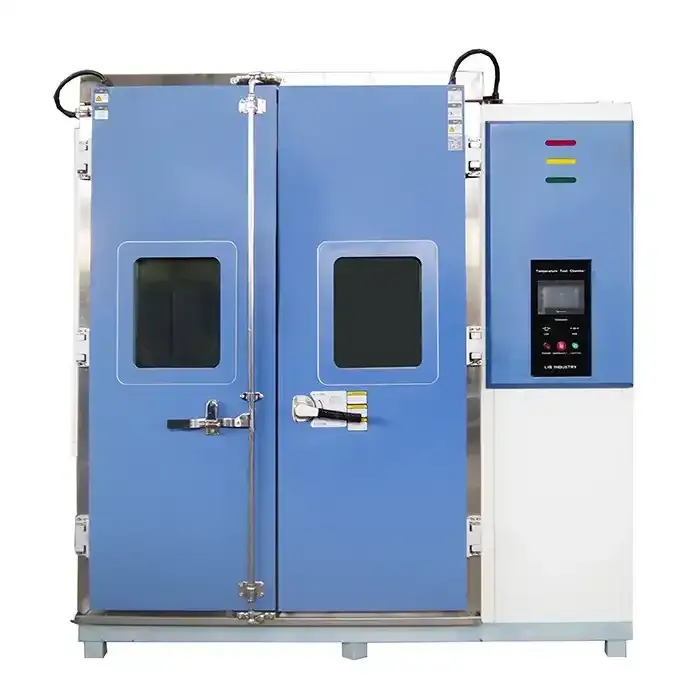
| High and Low Temperature Test Chamber — Suitable for evaluating product performance under controlled high- and low-temperature conditions. | Temperature & Humidity Test Chamber — Combines temperature and humidity control for environmental reliability testing under specified climatic conditions. | Thermal Shock Test Chamber — Designed for rapid transitions between high- and low-temperature environments when sudden thermal stress needs to be evaluated. |


If you're looking for thermal cycling equipment for product reliability testing, LIB Industry can provide a configuration based on your application rather than a one-size-fits-all chamber.
Send your required temperature range, specimen dimensions, cycling profile, and applicable standard to ellen@lib-industry.com to receive a suitable thermal cycling equipment solution and quotation.

.webp)