How Do Vibration Test Chambers Help Validate Automotive and EV Components?
Automotive and electric vehicle (EV) components face continuous vibration, temperature changes, and humidity during operation. Vibration test chambers combine mechanical vibration with controlled environmental conditions to help identify loose fasteners, solder fatigue, seal damage, and other potential failures before products enter service.
Need a vibration test chamber for automotive or EV components? Send LIB Industry your test standard, specimen dimensions, and required vibration and temperature ranges for a configuration recommendation and quotation within 24 hours.
Why Are Vibration Test Chambers Important for Automotive and EV Components?
Dynamic Loads During Vehicle Operation
Road surfaces, engines, and electric motors expose components to repeated vibration and mechanical shock. Laboratory vibration testing reproduces specified loads in a controlled environment, helping engineers evaluate structural integrity and electrical connections.
Why EV Components Require Careful Validation
Battery packs, inverters, connectors, and charging systems must withstand vibration throughout vehicle operation. Testing can reveal loose connections, cracked solder joints, and damaged seals before these problems lead to field failures.
What Combined Environmental and Vibration Testing Reveals
Combining vibration with temperature or humidity testing can reveal failure mechanisms that single-stress tests may miss.
| Combined stress | Potential failure modes |
|---|---|
| Vibration + low temperature | Brittle cracking, hardened seals |
| Vibration + high temperature | Fastener loosening, connector fretting |
| Vibration + humidity | Corrosion, moisture ingress |
| Vibration + temperature cycling | Solder fatigue, coating damage |
Which Vibration Profiles Should Vibration Test Chambers Support?
Sine, Random, and Shock Testing
Sine vibration: Identifies resonant frequencies and evaluates component response at specified frequencies.
Random vibration: Simulates broadband vibration associated with operating environments, such as road travel.
Shock testing: Applies short-duration mechanical impulses to evaluate resistance to sudden impacts.
Confirm that the shaker and controller support the profiles, frequency ranges, and test sequences required by your validation plan.
Which Standards Apply to Automotive Vibration Test Chambers?
The standards listed in the original technical information include:
ISO 16750-3: Mechanical loads for road vehicle electrical and electronic equipment.
IEC 60068-2-6: Sinusoidal vibration testing.
IEC 60068-2-64: Broadband random vibration testing.
MIL-STD-810: Environmental engineering considerations and laboratory tests.
GJB 150: Environmental test methods for military equipment.
Customer-specific and OEM requirements, including LV 124 where applicable, may also apply. Verify the relevant edition, test method, severity, and acceptance criteria before ordering.
How Should Vibration Test Chambers Match the Component's Mounting Location?
Components mounted near engines, motors, or battery packs may experience different vibration profiles from those installed inside the passenger cabin. Select the test profile according to the component's mounting location and applicable specification.
How Can You Match Vibration Test Chambers to EV Component Requirements?
Gather the Test Requirements
Before comparing equipment, prepare the component's dimensions, mass, mounting method, installation location, required vibration profiles, test duration, and applicable standards. Include the temperature and humidity conditions to help determine the necessary shaker force, frequency range, fixture design, and chamber size.
Compare Vibration Test Chamber Specifications
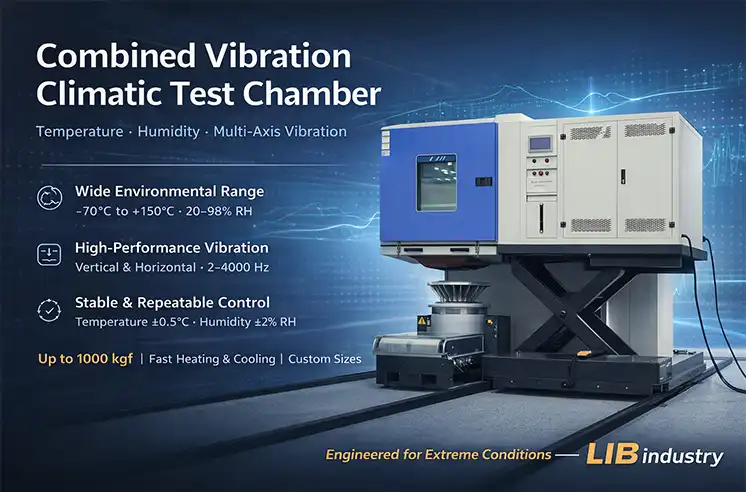
The following values are listed in LIB Industry's source specifications. Because the overview and specification data differ on some limits, confirm the exact values for the proposed configuration before placing an order.
| Parameter | Listed specification |
|---|---|
| Temperature range | Configurations extending to -70°C to +150°C; confirm the selected model |
| Relative humidity | 20%–98% RH, depending on configuration |
| Temperature fluctuation / deviation | ±0.5°C / ±2.0°C |
| Humidity deviation | ±2.5% RH |
| Temperature change rate | 5°C/min, subject to configuration and load |
| Vibration frequency range | 2–4,000 Hz |
| Rated vibration force | Up to 1,000 kgf |
|
|
|
 |
|
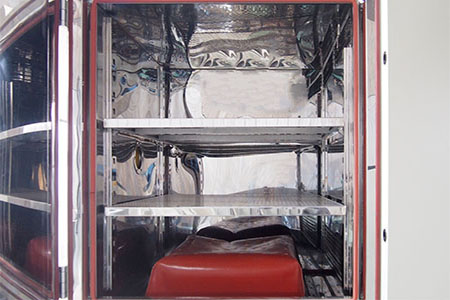
SUS 304 Climatic Workroom |
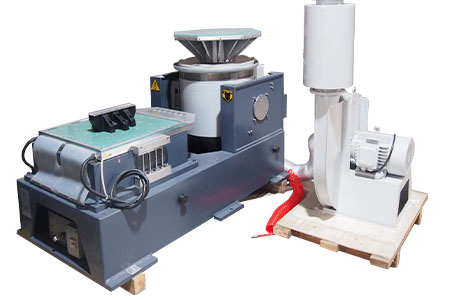
Versatile Vibration Testing |
Smart Control & Monitoring System |
Actual performance depends on the chamber and shaker configuration, specimen load, fixture, and test conditions. Request written confirmation of operating limits during combined vibration and environmental testing.
Which Vibration Test Chamber Format Should You Choose?
Benchtop, floor-standing, and walk-in configurations accommodate different specimen sizes and laboratory requirements. Larger EV assemblies may require a customized chamber and fixture. Confirm any additional altitude, pressure, or corrosion-testing requirements with the supplier.
How Should You Evaluate Shaker Capacity, Payload, and Fixtures for Vibration Test Chambers?
Check Force and Payload
LIB Industry's listed specifications state a maximum vibration force of 1,000 kgf and a payload capacity of up to 500 kg. These are separate limits.
Required force depends on the total moving mass and the specified acceleration. The calculation must account for the specimen, fixture, and moving table components. Ask the supplier to verify that the complete load is compatible with your required vibration profile.
Confirm Table Size and Vibration Axes
Check that the table accommodates the specimen and its mounting fixture. Confirm whether vertical, horizontal, or multi-axis testing is required and whether the proposed system supports the intended setup.
Design the Fixture for the Specimen
A poorly designed fixture can introduce unwanted resonances and affect test results. Fixtures should be rigid, securely fastened, and suitable for the required temperature range. Provide drawings and mounting details early so the supplier can assess compatibility and determine whether a custom fixture is needed.
How Do Vibration Test Chambers Combine Vibration and Temperature Testing?
Chamber Construction and System Integration
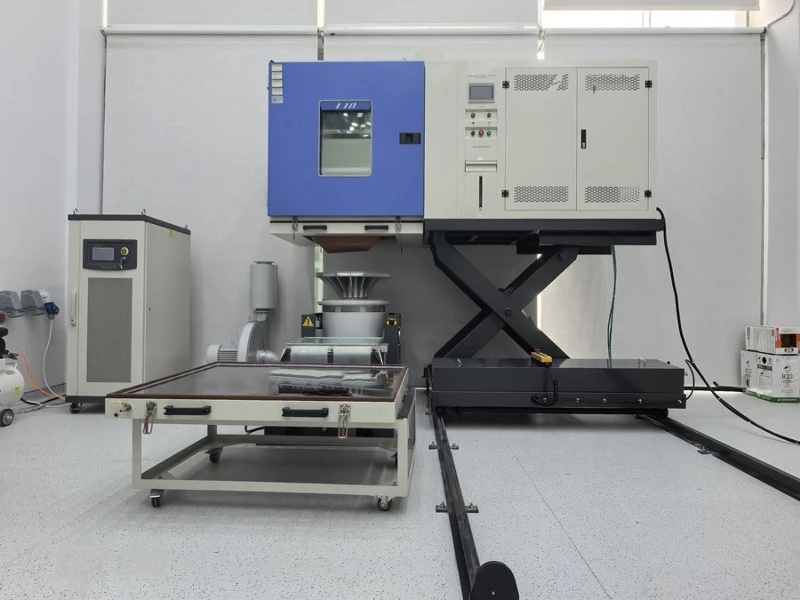
LIB Industry describes its combined systems as using a SUS304 stainless steel interior, environmental control equipment, a vibration table, a power amplifier, and a digital controller. Refrigeration options listed in the source include Bitzer or Bock compressors.
The chamber and shaker must be integrated to meet the specified environmental and vibration requirements. Confirm the actual components and system configuration in the quotation.
How Do Vibration Test Chambers Control Condensation?
When cold surfaces encounter humid air, condensation may form around the specimen or shaker interface, potentially affecting results or damaging sensitive components.
LIB Industry describes sealing and air-drying measures intended to reduce moisture around this interface. Ask the supplier how the system manages condensation and maintains the required humidity during combined testing.
Check Temperature, Humidity, and Vibration Control
The source lists PT100 Class A temperature sensors and RKC or Siemens controllers. Confirm sensor placement, control accuracy, data acquisition, and alarm functions for the selected model.
Where required by the test method, monitor the specimen itself as well as the chamber air to obtain useful validation data.
What Should You Look for in a Vibration Test Chamber Supplier?
Verify Certifications and Test Documentation
LIB Industry states that it operates an ISO 9001-based quality management system and offers CE-marked equipment, with external testing or verification involving organizations such as SGS and TÜV. Request the relevant documentation and confirm that it applies to the proposed model.
Review Safety and Protection Functions
The source lists protections for overheating, overcurrent, high refrigerant pressure, water-supply faults, and electrical leakage. Confirm which protections are included and how the system responds to shaker faults or specimen failure.
Confirm Warranty and After-Sales Support
LIB Industry offers a 3-year manufacturer warranty, lifetime technical support, remote video assistance, and installation and operator training according to project requirements. Confirm service coverage and terms in writing before purchase.
What Should You Confirm Before Ordering Vibration Test Chambers?
Technical Specifications
Ask the supplier to confirm the final specifications in writing, particularly any differences between the overview and detailed datasheet. Ensure the quotation states the limits applicable to your selected configuration and test conditions.
Facility Readiness
Check floor loading, electrical requirements, ventilation, noise limits, maintenance clearance, and equipment access routes. The source lists a 4 kW fan unit; verify the actual power and ventilation requirements for the selected system.
Acceptance Testing and Operator Training
Agree on acceptance criteria before delivery. Where appropriate, conduct an acceptance test using a reference load or representative specimen and document the results.
Training should cover test-program setup, specimen mounting, alarm handling, data collection, and routine maintenance.
Conclusion
Vibration test chambers help automotive and EV engineers identify failures that may be missed by single-stress testing. The right system depends on the specimen, required vibration profile, shaker capacity, fixture design, and environmental limits.
Before purchasing, confirm the exact operating specifications and combined-test performance in writing. Contact LIB Industry at ellen@lib-industry.com to discuss your requirements.
Related Environmental Testing Equipment
|
 |
|
|
| Temperature Humidity Chamber: For testing components under controlled temperature and relative humidity conditions. | Thermal Cycling Chamber: For evaluating component performance during repeated temperature changes. | Walk-in Environmental Chamber: For larger specimens or assemblies requiring a spacious controlled testing environment. |


FAQ: Vibration Test Chambers for Automotive and EV Testing
Can one vibration test chamber combine vibration, temperature, and humidity?
Yes. Combined systems can apply vibration while controlling temperature and, where supported by the configuration, humidity. Confirm the required frequency range and environmental limits for simultaneous operation.
How do I know whether the shaker force is sufficient?
The supplier should assess the specimen, fixture, and moving components against the required acceleration profile and shaker limits. Specimen weight alone is not enough to determine the required force.
Why does fixture design matter in vibration testing?
A loose or insufficiently rigid fixture can introduce unwanted resonances and change the vibration transmitted to the specimen. Proper mounting and fixture validation help improve test reliability.