Best Applications for Mini Environmental Chambers in Universities and Labs
Best Applications for Mini Environmental Chambers in Universities and Labs
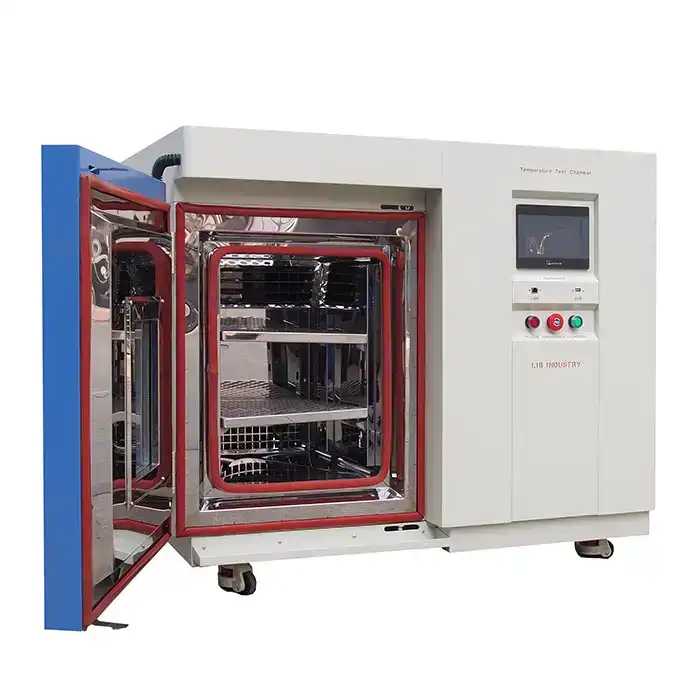
Mini environmental chambers have become indispensable tools in academic and research settings, offering precise control over temperature and humidity conditions in compact, economical packages. These versatile systems enable universities and laboratories to conduct rigorous environmental testing without requiring extensive floor space or substantial capital investment. From teaching fundamental principles of materials science to conducting cutting-edge research on biological samples, these chambers support diverse applications across multiple disciplines. The 50L and 80L capacity models provide sufficient testing volume for most academic projects while fitting comfortably on laboratory benches, making them ideal for institutions balancing research ambitions with spatial and budgetary constraints. Their programmable controllers and reliable performance standards ensure that students and researchers can replicate industry testing protocols and generate publishable data with confidence.
Teaching and Training in Environmental Testing Techniques
Hands-On Learning for Engineering Students
Engineering curricula increasingly emphasize practical experience alongside theoretical knowledge. A benchtop environmental chamber allows students to directly observe how materials respond to thermal cycling, humidity exposure, and combined stress conditions. Students can design experiments, program temperature profiles, and analyze results using the same equipment they'll encounter in industrial settings.
Demonstration of Thermal Analysis Principles
Instructors can illustrate concepts like coefficient of thermal expansion, phase transitions, and heat transfer mechanisms through live demonstrations. The programmable touch screen controller enables real-time visualization of temperature ramps and holds, helping students connect abstract equations with observable physical phenomena. This immediate feedback strengthens comprehension and retention.
Training in Quality Control Procedures
Quality assurance professionals require familiarity with environmental testing standards. Laboratory courses utilizing these chambers teach students to follow protocols like IEC, ASTM, and MIL-STD specifications. Trainees learn proper sample preparation, chamber loading techniques, and data documentation practices that directly transfer to workplace responsibilities.
Research on Material Behavior Under Stress Conditions
Polymer and Composite Material Characterization
Research teams investigating advanced materials benefit from controlled environmental exposure. The -20°C to +150°C range accommodates testing of polymers, composites, and elastomers across their service temperature spectrum. Humidity control from 20% to 98% RH enables studies of moisture absorption, dimensional changes, and degradation mechanisms in hygroscopic materials.
Coating and Surface Treatment Evaluation
Protective coatings undergo accelerated aging tests to predict long-term performance. Researchers cycle samples through temperature and humidity extremes to assess adhesion, corrosion resistance, and appearance retention. The 3°C/min heating rate and 1°C/min cooling rate provide controlled stress application without thermal shock that might produce unrealistic failure modes.
Mechanical Property Studies at Temperature Extremes
Materials destined for aerospace, automotive, or outdoor applications must maintain mechanical integrity across temperature ranges. Small test specimens fit easily within the chamber's interior dimensions (320×350×450mm for the 50L model), allowing tensile bars, flexure specimens, or impact samples to equilibrate before mechanical testing.
Small-Scale Electronics and Device Testing Projects
Component Reliability Screening
Electronic components face temperature cycling during operation and storage. Graduate research projects often focus on failure mechanisms in semiconductors, capacitors, or solder joints. The mini environmental chamber's temperature uniformity (±0.5°C fluctuation, ±2.0°C deviation) ensures consistent stress application across all samples, producing statistically meaningful reliability data.
Battery Performance Evaluation
Energy storage research demands precise temperature control during charge-discharge cycling. Small battery cells or modules fit within the chamber while researchers monitor capacity, internal resistance, and safety characteristics. The low-temperature capability down to -40°C or -70°C enables cold-weather performance studies for electric vehicle applications.
Sensor Calibration and Characterization
Sensor development requires validation across operating conditions. Temperature and humidity sensors, in particular, need calibration against known standards. The PT100 Class A temperature sensor provides traceable accuracy (±0.001°C resolution), allowing researchers to establish calibration curves and uncertainty budgets for prototype sensors.
|
Testing Parameter |
TH-50 Specification |
TH-80 Specification |
Research Benefit |
|
Internal Volume |
320×350×450mm |
400×400×500mm |
Accommodates various sample sizes |
|
Temperature Range |
-20°C to +150°C (expandable to -70°C) |
-20°C to +150°C (expandable to -70°C) |
Covers most material service conditions |
|
Humidity Range |
20% to 98% RH |
20% to 98% RH |
Simulates diverse environmental exposures |
|
Temperature Uniformity |
±0.5°C fluctuation |
±0.5°C fluctuation |
Ensures consistent sample conditioning |
Biological and Chemical Sample Stability Studies
Pharmaceutical Formulation Testing
Drug development requires stability studies under ICH guideline conditions. Accelerated aging at elevated temperatures and humidity levels predicts shelf life and degradation pathways. The programmable controller stores 999 programs with 999 segments each, enabling complex stability protocols with multiple temperature-humidity combinations.
Biological Material Preservation Research
Researchers studying cryopreservation, biobanking, or cold-chain logistics use low-temperature capabilities to evaluate preservation media and packaging systems. The -70°C option approaches temperatures used for enzyme storage and biological reagent archival, supporting optimization studies without requiring ultra-low freezers.
Chemical Reagent Degradation Studies
Analytical chemistry laboratories investigate how storage conditions affect reagent stability and assay performance. Light-sensitive compounds stored at controlled temperatures show predictable degradation kinetics. The built-in water tank with automatic low-level alarm maintains consistent humidity control throughout extended studies.
Laboratory Demonstrations for Engineering and Science Courses
Thermodynamics and Heat Transfer Experiments
Physics and mechanical engineering courses leverage mini environmental chambers for experiments on conduction, convection, and radiation. Students measure temperature distributions, calculate heat transfer coefficients, and validate theoretical models against experimental data. The precise temperature control eliminates ambiguity about boundary conditions.
Materials Science Phase Transition Studies
Observing phase changes in materials provides concrete examples of thermodynamic principles. Wax melting points, polymer glass transitions, and metal annealing processes become visible phenomena rather than abstract concepts. Students document transitions using the chamber's RS-232/RS-485 interface for data logging.
Environmental Science Climate Simulation
Ecology and environmental science programs simulate climate conditions to study organism responses or material weathering. Plant seedling germination rates under temperature and humidity variations, or building material degradation under freeze-thaw cycling, offer interdisciplinary learning opportunities connecting laboratory work with real-world sustainability challenges.
Pilot Experiments Prior to Large-Scale Industrial Testing
Product Development Feasibility Studies
Companies partnering with university research groups often begin with small-scale testing before committing to production validation. The economical pricing and 220V power requirement make these chambers accessible for preliminary investigations. Successful pilot results justify investment in larger industrial chambers for production qualification.
Process Parameter Optimization
Manufacturing processes involving curing, drying, or conditioning benefit from parameter studies. Researchers vary temperature profiles, hold times, and humidity levels to identify optimal conditions. The three-year warranty and lifetime follow-up service from the manufacturer provide reliability for ongoing industrial collaboration projects.
Standards Compliance Verification
Before subjecting products to formal third-party testing, companies verify compliance internally. Academic laboratories with certified chambers perform preliminary assessments, identifying potential failures early in the development cycle. The multi-language system (English, Spanish, French, Chinese, and others) facilitates international collaboration and documentation.
|
Application Category |
Typical Samples |
Key Testing Parameters |
Academic Benefit |
|
Materials Research |
Polymers, composites, coatings |
Thermal cycling, humidity exposure |
Publication-quality data generation |
|
Electronics Development |
Circuit boards, components, batteries |
Temperature reliability, performance |
Industry-relevant project experience |
|
Biological Studies |
Pharmaceuticals, reagents, biomaterials |
Stability, degradation kinetics |
Regulatory compliance training |
|
Product Development |
Consumer goods, packaging, prototypes |
Accelerated aging, standards testing |
Industry partnership opportunities |
Empower Research & Learning with LIB Industry's Versatile Mini Environmental Chamber
Space-Efficient Laboratory Integration
Modern research facilities balance competing demands for specialized equipment within limited footprints. The benchtop design occupies minimal floor space while delivering full environmental testing capabilities. Universities expanding research capacity without building renovations find these systems integrate seamlessly into existing laboratories alongside other analytical instruments.
Cost-Effective Research Infrastructure
Academic budgets constrain equipment purchases, making economical solutions essential. The reasonable pricing relative to full-scale walk-in chambers allows departments to equip multiple research groups rather than forcing shared access with scheduling conflicts. Individual investigators gain dedicated testing capacity, accelerating project timelines and student training throughput.
Comprehensive Technical Support
LIB Industry provides 24-hour technical support, video training, and on-site service when needed. Academic users benefit from responsive assistance during critical research phases or when training new students. The manufacturer's expertise in turn-key solutions extends beyond equipment delivery to encompass installation, commissioning, and operator training tailored to educational environments.
|
Feature |
Specification |
Academic Advantage |
|
Controller |
Programmable color LCD touchscreen |
Intuitive operation for students |
|
Programming Capacity |
999 programs × 999 segments |
Accommodates complex research protocols |
|
Connectivity |
RS-232/RS-485, PC Link, LAN, APP |
Facilitates data integration with laboratory information systems |
|
Temperature Resolution |
±0.001°C |
Enables precise thermal analysis studies |
|
Multi-Language Support |
8+ languages including English, Spanish, French |
Supports international research collaborations |
|
Warranty |
3 years with lifetime follow-up |
Ensures long-term reliability for ongoing projects |
Conclusion
Mini environmental chambers represent strategic investments for universities and research laboratories seeking to advance both education and discovery. Their compact footprint, comprehensive functionality, and accessible pricing democratize environmental testing capabilities across academic disciplines. Whether supporting undergraduate demonstrations, graduate research projects, or industry partnerships, these systems deliver reliable performance that meets rigorous scientific standards while adapting to diverse institutional needs.
FAQs
What temperature range is suitable for most university research applications?
The standard -20°C to +150°C range accommodates approximately 80% of academic testing needs, including polymer characterization, electronics reliability, and materials aging studies. Specialized low-temperature research may require the -40°C or -70°C options for cryogenic studies or Arctic condition simulation.
How does the chamber's size affect sample testing capacity?
The 50L model (320×350×450mm) typically accommodates 15-25 small electronic assemblies or 50-100 material coupons simultaneously. The 80L model (400×400×500mm) increases capacity by approximately 60%, allowing larger sample populations for statistical significance or testing of assembled products rather than individual components.
Can students operate these chambers independently after training?
The intuitive programmable touchscreen controller enables student operation following basic safety and protocol training, typically requiring 2-3 hours of instruction. The multi-language interface and built-in standard programs reduce learning curves, while automatic alarms for conditions like low water levels prevent common operational errors.
Contact LIB Industry for Your Laboratory Solutions
LIB Industry stands as a trusted manufacturer and supplier of environmental test chambers, delivering quality equipment with CE approval and competitive pricing. Our factory specializes in providing turn-key solutions tailored to your research requirements.