Salt Spray Testing for Fasteners, Bolts, and Connectors
Fasteners, bolts, and connectors serve as critical joining elements across automotive, aerospace, marine, and construction applications. Their exposure to moisture, chlorides, and atmospheric pollutants makes them prime candidates for accelerated corrosion. Salt spray testing conducted in a controlled salt spray test chamber replicates decades of environmental degradation in laboratory conditions, allowing manufacturers to validate protective coatings, assess material compatibility, and predict service life. This standardized methodology transforms quality assurance from reactive failure analysis into proactive design validation, ensuring that these small yet essential components maintain structural integrity throughout their intended operational lifespan.
A recent customer from Argentina shared their experience using the chamber for paint coating evaluation. They highlighted how the controlled salt spray tests allowed them to observe coating performance under harsh conditions, identify weak spots before large-scale production, and adjust formulations efficiently. According to them, the chamber’s consistent environment and precise control significantly improved the reliability of their results, helping their team make confident decisions on coating durability and finish quality.

Why Fasteners and Connectors Are Vulnerable to Corrosion?

High Surface-Area-to-Volume Ratios Accelerate Degradation
Fasteners possess geometric configurations that concentrate corrosive attack. Threads, underhead fillets, and point geometries create crevices where electrolytes accumulate, establishing galvanic cells that accelerate metal dissolution. The small cross-sectional dimensions mean even minor material loss significantly compromises mechanical properties.
Dissimilar Metal Combinations Create Galvanic Couples
Assembly requirements frequently necessitate joining different alloys - steel bolts securing aluminum panels, brass connectors mating with steel terminals. These configurations establish electrochemical potential differences, driving accelerated corrosion at contact interfaces. The galvanic series dictates which member becomes anodic, suffering preferential attack while the cathode remains protected.
Stress Concentrations Enable Environmentally Assisted Cracking
Threaded regions experience stress intensification during installation and operational loading. When combined with corrosive environments, these stress concentrations initiate stress corrosion cracking and hydrogen embrittlement. Cracks propagate through load-bearing cross-sections, causing sudden catastrophic failures without visible warning signs.
Material and Coating Selection for Corrosion Resistance
Substrate Material Performance Characteristics
Carbon steel fasteners offer economical solutions but require protective coatings for most applications. Stainless steel grades (304, 316, 410) provide inherent corrosion resistance through chromium oxide passivation, though chloride environments can breach this protection. Aluminum alloys combine lightweighting benefits with natural oxide formation, while titanium alloys deliver exceptional resistance for aerospace and marine deployments.
Metallic Coating Systems and Thickness Requirements
Zinc plating remains the industry standard, sacrificially corroding to protect the steel substrate. Electroplated zinc typically achieves 5-15 micrometers thickness, while hot-dip galvanizing provides 45-85 micrometers for extended protection. Cadmium coatings excel in aerospace applications but face environmental restrictions. Zinc-nickel alloys deliver enhanced performance, particularly in high-temperature automotive environments.
Organic Coating Technologies for Enhanced Protection
Conversion coatings (chromate, phosphate, trivalent chromium) provide thin protective layers and improve paint adhesion. Powder coatings and liquid paint systems create barrier protection, though mechanical damage during assembly can compromise integrity. Multi-layer systems combining metallic undercoats with organic topcoats optimize both sacrificial and barrier protection mechanisms. Testing these coatings' durability in a salt spray test machine allows manufacturers to assess the protective effectiveness of various coating systems under accelerated corrosion conditions, ensuring they meet performance requirements.
Salt Spray Test Standards for Fasteners and Connectors

ASTM B117 Neutral Salt Spray Protocol
This foundational standard specifies continuous spraying of 5% sodium chloride solution at 35°C with 95-98% relative humidity. Test durations range from 24 hours for basic screening to 1000+ hours for severe marine environments. The chamber atomizes the salt solution through pressure nozzles, creating a fog that settles uniformly across specimen surfaces.
|
Parameter |
Specification |
Purpose |
|
Salt Concentration |
5% NaCl (w/v) |
Simulates seawater chloride levels |
|
Chamber Temperature |
35 ± 2°C |
Accelerates electrochemical reactions |
|
Humidity Range |
95-98% RH |
Maintains continuous electrolyte film |
|
Fog Collection Rate |
1-2 mL/80cm²·h |
Ensures consistent exposure intensity |
ISO 9227 Acetic Acid and Copper-Accelerated Variants
While neutral salt spray provides baseline data, ISO 9227 defines accelerated test methods. The acetic acid salt spray (AASS) reduces pH to 3.1-3.3, intensifying attack on zinc and aluminum coatings. Copper-accelerated acetic acid salt spray (CASS) incorporates copper chloride, further accelerating corrosion of anodized aluminum and organic coatings, compressing test durations by factors of 4-10.
Automotive and Aerospace Specific Requirements
General Motors GMW 14872 and Ford CETP 00.00-L-467 specify cyclic exposure combining salt spray, humidity, and ambient drying. These protocols better replicate real-world conditions where wet-dry cycling concentrates corrosive species. Aerospace standards like ASTM F1941 define requirements for specific fastener grades, correlating test performance with field experience data.
Performance Evaluation Criteria After Salt Spray Exposure
Visual Appearance and Defect Categorization
Examiners assess corrosion products (white, red, or black rust), blistering, pitting density, and coating adhesion. Rating systems quantify degradation severity, with photographic standards ensuring consistency across evaluators. Localized attack at crevices, threads, and cut edges receives particular scrutiny as these regions initiate failure mechanisms.
Dimensional and Mechanical Property Verification
Critical dimensions (thread pitch diameter, length under head) are measured pre- and post-exposure to detect material loss. Tensile testing, proof load verification, and torque-tension relationships confirm that mechanical performance remains within specification. Hydrogen embrittlement susceptibility is evaluated through slow strain rate testing or sustained load cracking assessments.
Electrochemical Impedance and Coating Integrity
Advanced evaluations employ electrochemical impedance spectroscopy to quantify coating resistance and capacitance. These measurements detect early-stage degradation before visible corrosion appears. Adhesion testing (cross-hatch, pull-off) validates coating-substrate bonding, while salt fog resistance hours, tested in a salt spray test chamber, are correlated with coating thickness and composition.
|
Evaluation Method |
Parameter Measured |
Acceptance Criteria |
|
Visual Inspection |
Red rust appearance time |
Zero red rust for specified duration |
|
Thread Gauging |
Pitch diameter reduction |
< 0.05 mm material loss |
|
Tensile Testing |
Ultimate strength retention |
> 95% of baseline value |
Comparing Coated and Uncoated Fasteners Using Test Data
Zinc Plating Performance Benchmarks
Electroplated zinc fasteners typically withstand 72-200 hours before red rust appearance, depending on coating thickness and chromate post-treatment. A 10-micrometer zinc layer provides approximately 100 hours protection, while 15 micrometers extends this to 150-200 hours. Zinc-nickel alloy coatings (12-15% nickel) deliver 500-1000 hour performance, representing a 5-10× improvement.
Bare Steel Baseline Degradation Rates
Uncoated carbon steel fasteners develop red rust within 2-8 hours of continuous salt spray exposure. Corrosion progresses rapidly, with thread forms becoming severely degraded by 24 hours. This dramatic contrast validates the necessity of protective systems and establishes baseline data for calculating coating effectiveness factors.
Stainless Steel and Exotic Alloy Resistance
Austenitic stainless steels (304, 316) resist general corrosion but may exhibit pitting after extended exposure, particularly in creviced regions. Precipitation-hardened grades (17-4PH) show vulnerability at grain boundaries. Titanium alloys demonstrate exceptional resistance, withstanding 3000+ hours without visible attack, though cost restricts applications to critical aerospace and medical devices.
Reducing Field Corrosion Failures Through Proper Testing
Warranty Cost Reduction Through Design Validation
Automotive manufacturers report that salt fog test chamber validation during development reduces warranty claims by 60-80% for corrosion-related fastener failures. Testing identifies marginal coating specifications, incompatible material pairings, and design features that trap moisture. Early detection allows specification changes before production tooling investment.
Supplier Qualification and Incoming Inspection Protocols
Establishing salt spray performance requirements in procurement specifications enables objective supplier comparison. Periodic testing of production lots verifies coating process control and identifies drift before widespread distribution. Statistical process control charts track test duration performance, triggering corrective action when results approach minimum thresholds.
Accelerated Life Prediction and Maintenance Scheduling
Correlation studies between laboratory test hours and field exposure years enable service life prediction. Marine environments typically require 1000+ hour salt spray resistance for 10-year service, while automotive underbody applications use 720-hour performance for 7-year warranties. These relationships inform maintenance interval determination and component replacement scheduling.
|
Application Environment |
Target Salt Spray Duration |
Predicted Service Life |
|
Interior automotive |
240 hours |
5-7 years |
|
Exterior automotive |
720 hours |
7-10 years |
|
Marine atmospheric |
1000+ hours |
10-15 years |
Consistent Testing for Small Hardware with LIB Industry Salt Spray Test Chambers
|
|
Model |
S-150 |
|
|
Internal dimensions (mm) |
470*590*400 |
||
|
Overall dimensions (mm) |
620*1400*1050 |
||
|
Temp. Range |
Ambient ~ +60 degree |
||
|
Temp. Fluctuation |
± 0.5 ℃ |
||
|
Temp. Deviation |
± 2.0℃ |
||
|
Humidity Range |
95 % ~ 98 % RH |
||
|
Salt Fog Deposition |
1~2ml / 80cm2 · h |
||
|
Spray Type |
Continuous / Periodic |
||
|
Heating Element |
Nichrome heater |
||
|
Salt Fog Collected |
Fog collector and fog measure cylinder |
||
|
Controller |
PID controller |
||
|
Material |
Glass fiber reinforced plastics |
||
|
Standard Configuration |
8 round bars and 7 V-shaped grooves |
||
Optimized Chamber Configurations for Fastener Testing
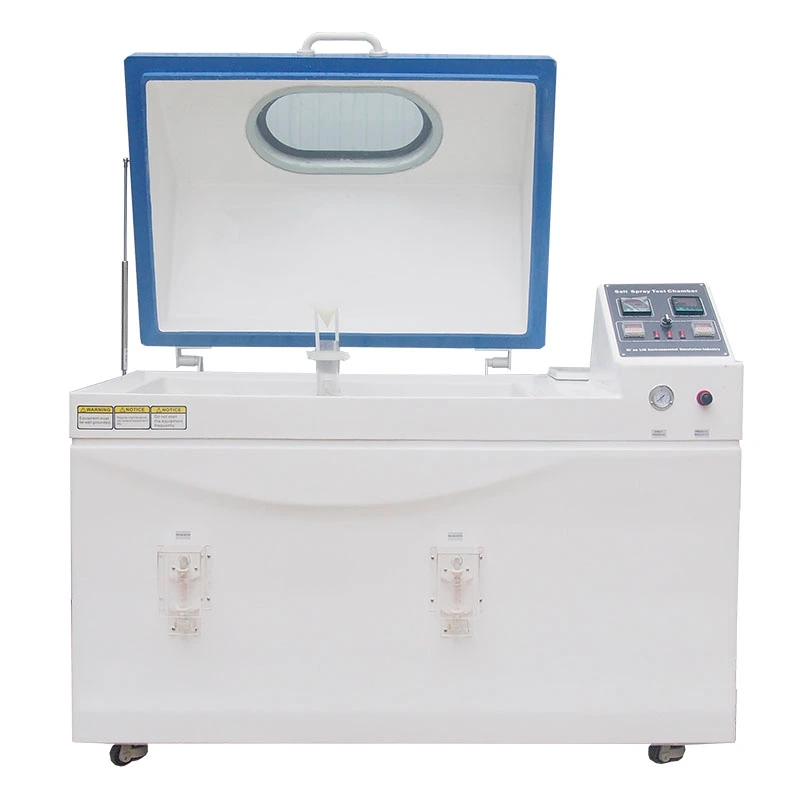
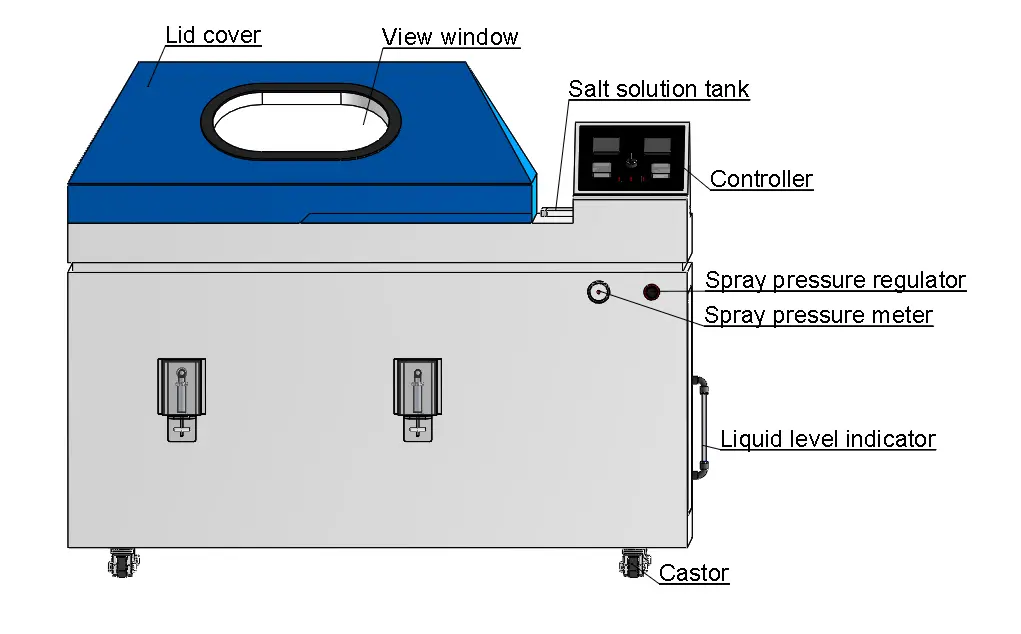
LIB Industry provides salt spray test chambers ranging from 110L to 1600L capacity, accommodating batch testing requirements from prototype validation to production qualification. The S-150 model (110L volume) suits component-level testing, while the S-020 (1600L) enables full assembly verification. Glass fiber reinforced plastic construction ensures chamber longevity despite continuous corrosive exposure.
Precision Environmental Control Systems
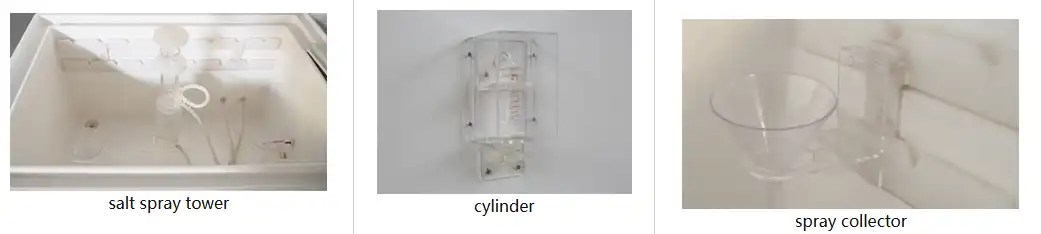
PID control maintains temperature within ±0.5°C and humidity between 95-98% RH, ensuring reproducible test conditions. Adjustable spray towers and nozzle configurations meet ASTM B117, ISO 9227, and automotive OEM specifications. Fog collection cups positioned in opposing orientations verify uniform deposition rates of 1-2 mL/80cm²·h across the test chamber volume.
Safety and Automation Features for Unattended Operation
Integrated protection systems prevent humidifier dry-combustion, over-temperature excursions, and water shortage interruptions within the salt spray tester, ensuring stable and continuous operation. Network connectivity enables remote monitoring and data logging, documenting test conditions throughout multi-day exposure cycles. The standardized configuration includes six support bars and five V-shaped grooves, positioning hundreds of fasteners simultaneously while ensuring fog access to all surfaces.
Conclusion
Salt spray testing transforms fastener reliability from uncertainty into quantified performance. Standardized exposure conditions reveal coating effectiveness, validate material selections, and predict field service life before product deployment. Manufacturers leveraging accelerated corrosion testing reduce warranty expenses, enhance product reputation, and deliver components that withstand intended environmental challenges throughout operational lifecycles.
FAQ
How long should fasteners be tested in a salt spray chamber to simulate 10 years of coastal exposure?
Marine atmospheric environments typically require 1000-1500 hours of continuous neutral salt spray testing to correlate with 10-year field exposure. Actual correlation factors depend on specific microclimate conditions, material systems, and design geometries.
Can salt spray testing predict stress corrosion cracking susceptibility in high-strength fasteners?
Standard salt spray protocols primarily evaluate general corrosion and coating performance. Stress corrosion cracking assessment requires specialized testing combining environmental exposure with sustained tensile loading, typically following ASTM F1624 or similar standards for hydrogen embrittlement evaluation.
What causes inconsistent salt spray test results between different laboratories?
Variations in chamber fog distribution, salt solution preparation, specimen positioning, and ambient temperature control contribute to inter-laboratory differences. Strict adherence to standardized protocols, regular chamber validation using reference specimens, and participation in round-robin testing programs minimize these discrepancies.
Contact LIB Industry for Advanced Salt Spray Testing Solutions
As a leading salt spray test chamber manufacturer and supplier, LIB Industry delivers turn-key environmental testing systems globally. Our chambers provide precise corrosion evaluation for fasteners, bolts, and connectors across automotive, aerospace, and marine applications. Contact ellen@lib-industry.com to discuss your testing requirements.