How does a dust ingress test chamber work?
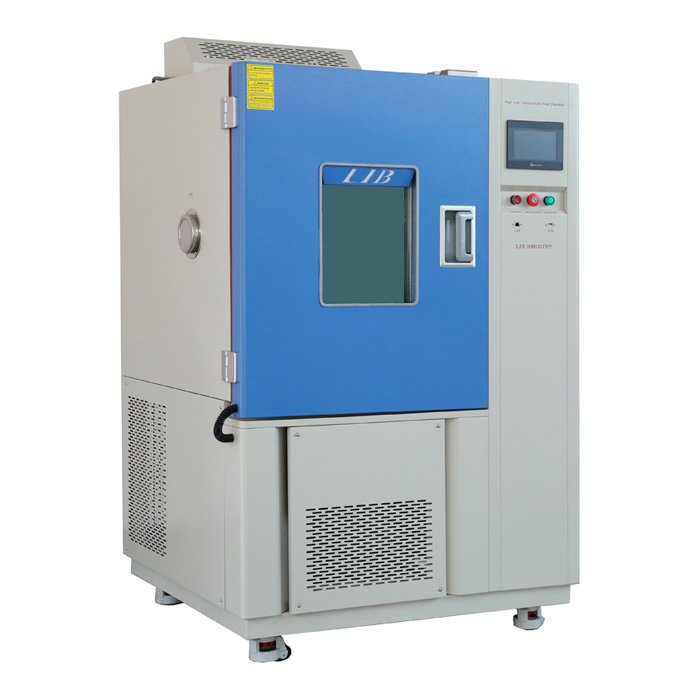
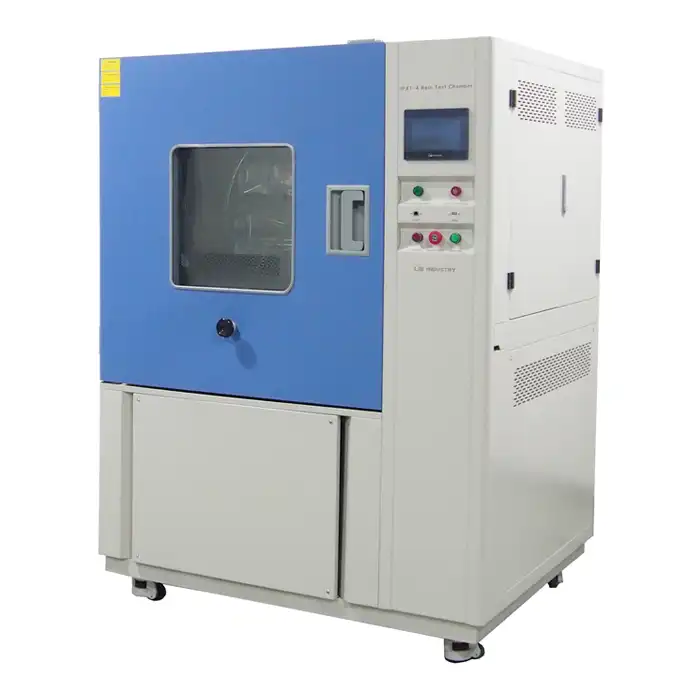
A dust ingress test chamber operates by creating a controlled environment where talcum powder or standardized test dust circulates around a test specimen under negative pressure. The chamber suspends fine particles (typically 50 micrometers in diameter with 75-micrometer mesh spacing) in an enclosed space while applying vacuum pressure to draw dust toward the specimen. This simulates real-world dusty conditions to evaluate whether products meet IP5X or IP6X protection ratings according to IEC 60529 standards. The automated process includes programmable circulation periods, settling times, and vacuum application, with specialized filtration systems ensuring repeatable test conditions.
The Fundamentals of Dust Ingress Testing
Understanding dust ingress testing requires familiarity with the internationally recognized standards that define product durability in dusty environments. These tests validate whether electronic enclosures, lighting fixtures, and industrial equipment can withstand particle infiltration during their operational lifespan.
IP Rating System and Dust Protection Levels
The Ingress Protection (IP) rating system provides a standardized classification for enclosure effectiveness against solid particles and liquids. The IP code consists of two digits, where the first digit indicates protection against solids including dust. IP5X certification means the enclosure prevents harmful dust deposits, though limited ingress is permitted. IP6X represents complete dust-tight protection with zero particle penetration.
LIB Industry's dust ingress test chambers accommodate both protection levels, enabling manufacturers to validate products across various application requirements. Testing distinguishes between partial protection suitable for consumer electronics and absolute sealing demanded by medical devices or aerospace components.
IEC 60529 Standard Requirements
IEC 60529 establishes the comprehensive framework governing dust ingress evaluation. The standard specifies test dust composition, particle size distribution, concentration levels, test duration, and acceptance criteria. Talcum powder serves as the standard test medium due to its consistent particle characteristics and ability to penetrate small openings.
The standard mandates specific test conditions: chamber volume proportional to specimen size, dust concentration of 2 kilograms per cubic meter, and vacuum pressure between 2 and 20 millibars below atmospheric pressure. Test duration varies from 2 to 8 hours depending on enclosure volume and ventilation characteristics.
LIB Industry's chambers conform precisely to these specifications, delivering IEC 60529-compliant testing environments that satisfy certification bodies worldwide. The programmable controllers maintain exact test parameters throughout the evaluation cycle.
Industries Requiring Dust Ingress Testing
Numerous sectors mandate dust ingress validation to ensure product reliability and safety. Outdoor lighting manufacturers test luminaires destined for desert climates or construction sites. Solar photovoltaic inverter producers verify enclosure integrity against sand infiltration that could compromise electrical connections.
Telecommunications equipment deployed in arid regions undergoes rigorous dust testing to prevent signal degradation. HVAC systems installed in industrial facilities require certified protection against manufacturing particulates. Medical device manufacturers validate surgical equipment enclosures to maintain sterile environments.
Automotive suppliers test vehicle electronics, sensors, and connectors for durability in dusty operating conditions. Industrial automation components face similar requirements where airborne particles could cause mechanical failures or electrical shorts.
Components and Operation of Dust Ingress Test Chambers
 The sophisticated engineering within a dust ingress test chamber integrates multiple subsystems that work harmoniously to create precise, repeatable test conditions. Each component plays a critical role in simulating real-world dusty environments while maintaining measurement accuracy.
Chamber Construction and Environmental Control
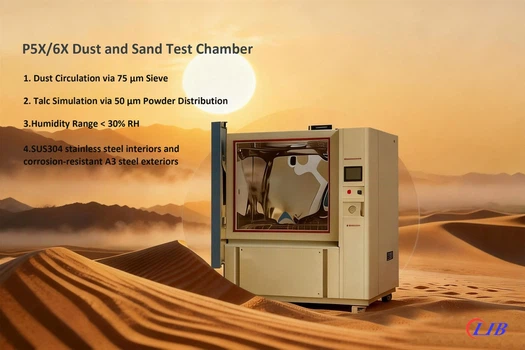
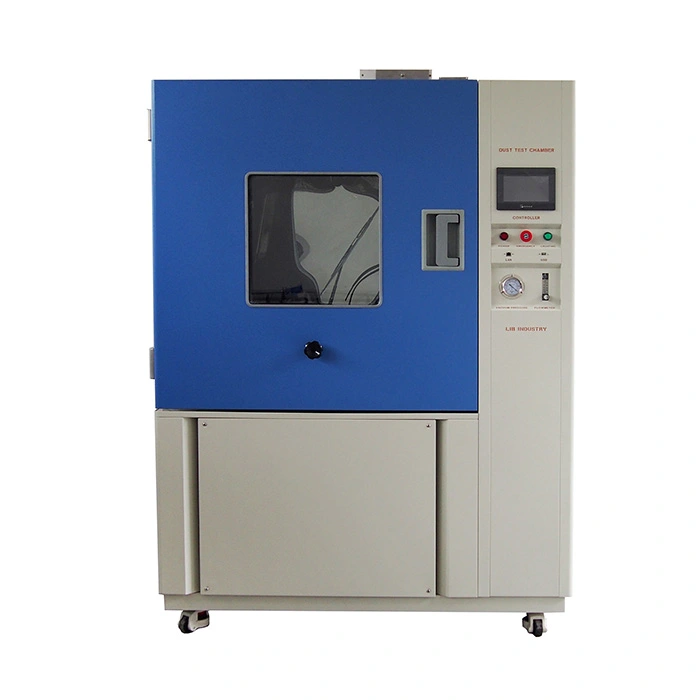
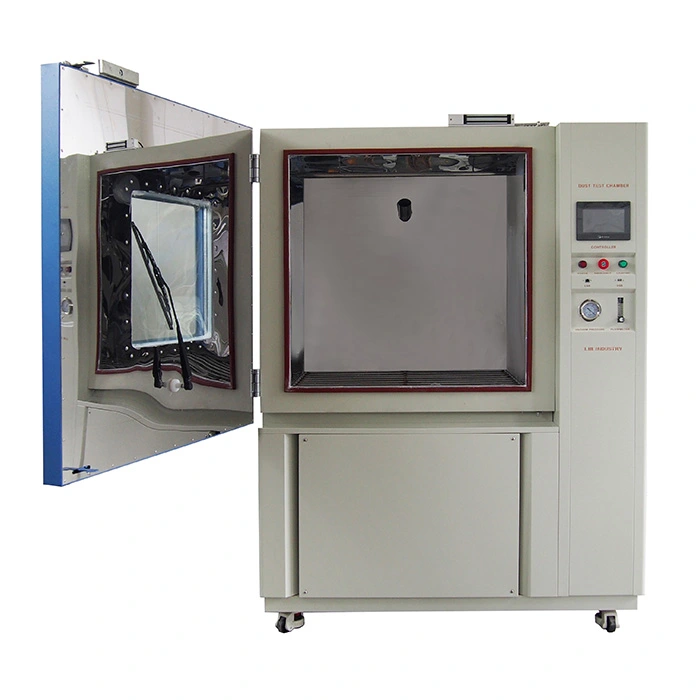
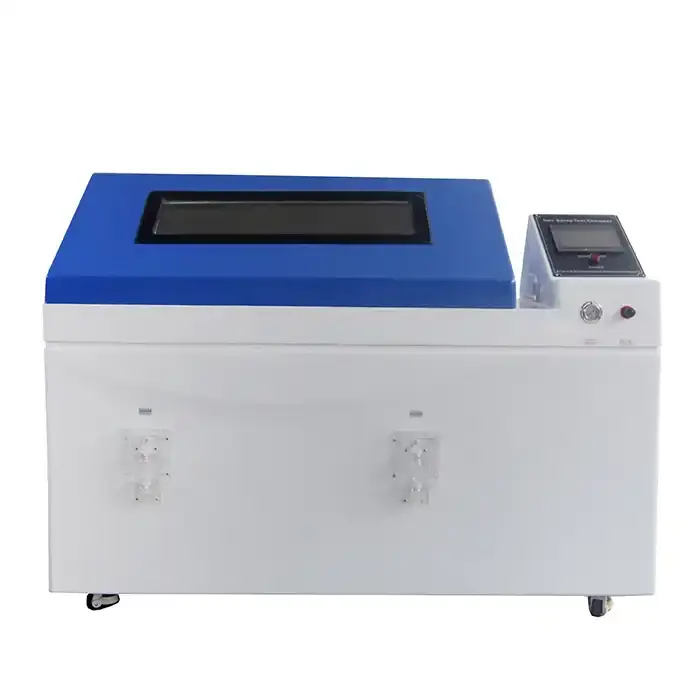
The test chamber body comprises an interior workspace constructed from SUS304 stainless steel, providing corrosion resistance and easy cleaning between test cycles. LIB Industry utilizes A3 steel plate with protective coating for the exterior shell, balancing structural integrity with cost efficiency across their 14+ chamber models.
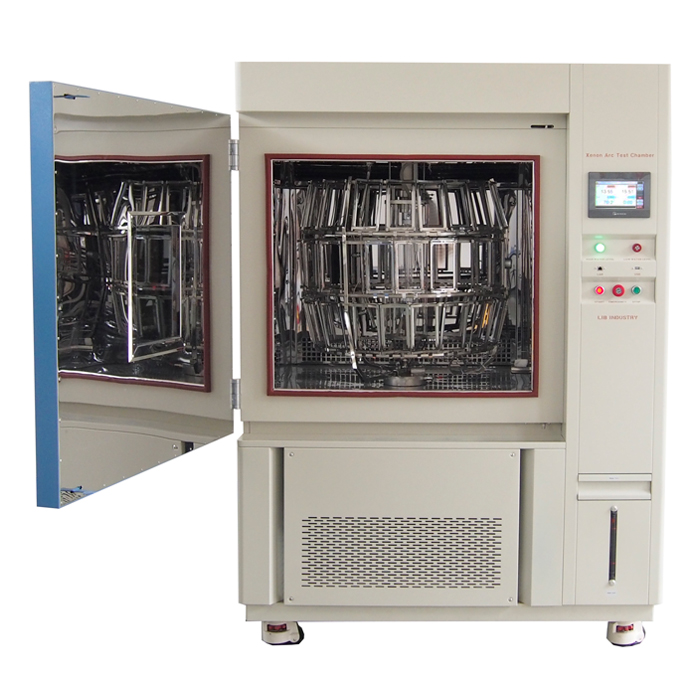
Interior dimensions range from 800 liters (800×1000×1000mm) to 2000 liters (1000×2000×1000mm), accommodating specimens from small junction boxes to large industrial equipment panels. Double-layer thermostable silicone rubber seals the observation window, preventing dust leakage while enabling visual monitoring during testing.
Temperature control systems maintain ambient to +50℃ ranges, simulating operational heat conditions that might affect seal performance. Humidity regulation keeps relative humidity below 30% RH, preventing moisture from affecting dust characteristics or test outcomes. Interior LED lighting illuminates the test space for documentation and observation purposes.
Electromagnetic locks secure the chamber door, preventing accidental opening during pressurized test sequences. The locking mechanism integrates with the controller, requiring deliberate operator action through the touchscreen interface to ensure safety protocols.
Dust Circulation and Filtration Systems
The mesh sieve represents a critical filtration component, featuring 75-micrometer diameter openings that standardize particle size distribution. This filtration removes agglomerated particles or oversized contaminants that could skew test results, ensuring only appropriately sized dust reaches the specimen.
Talcum powder with 50-micrometer nominal wire diameter serves as the standard test medium, supplied in 5-kilogram quantities with each LIB chamber. The dust dispersion mechanism circulates particles throughout the chamber volume using controlled airflow patterns that maintain uniform concentration.
Programmable circulation periods (0 to 99 hours 59 minutes) allow customization for different enclosure types and test requirements. The blowing time parameter controls active dust movement phases, while settling periods let particles approach the specimen under gravity and vacuum influence.
The vacuum system comprises precision-calibrated pressure gauges, air filters preventing pump contamination, adjustable pressure regulators maintaining consistent negative pressure, and reinforced connecting tubes. This integrated system draws dust toward specimen openings, simulating real-world pressure differentials that drive particle infiltration.
Advanced Control and Monitoring Technology
LIB Industry equips their dust ingress test chambers with PID programmable color LCD touchscreen controllers, offering intuitive operation and comprehensive parameter management. The controller creates up to 120 programs with 20 segments each, enabling complex test sequences that replicate variable environmental conditions.
Ethernet connectivity allows remote monitoring and data logging to networked computers, facilitating documentation for certification submissions. Real-time parameter displays show current temperature, humidity, vacuum pressure, elapsed test time, and cycle progression.
|
Parameter |
Range/Specification |
Function |
|
Fight Time |
0 - 99H59M |
Controls dust circulation duration |
|
Blowing Time |
0 - 99H59M |
Sets active dust dispersion period |
|
Temperature |
Ambient - 50℃ |
Simulates operational heat conditions |
|
Humidity |
< 30% RH |
Prevents moisture interference |
|
Vacuum Pressure |
2 - 20 mbar below atmospheric |
Drives dust toward specimen |
 |
 |
|
| Test Area | LAN and USB | Controller |

Multiple safety devices protect equipment and specimens: over-temperature protection prevents thermal damage, over-current protection guards electrical systems, earth leakage protection ensures operator safety, and phase sequence protection validates proper electrical connections.
The specimen power outlet features a dust-proof 16A socket, enabling powered operation of electronic devices during testing. This capability reveals whether active ventilation systems or thermal effects influence dust ingress patterns.
The Dust Ingress Testing Process and Analysis
Conducting a compliant dust ingress test involves meticulous preparation, precise execution, and thorough evaluation. The standardized methodology ensures reproducible results that certification bodies accept as valid protection level verification.
Pre-Test Preparation and Setup
Test preparation begins with specimen conditioning to ambient temperature, preventing thermal expansion effects that might temporarily seal openings. Technicians document all visible openings, seals, gaskets, and potential ingress points through photography and dimensional measurement.
The specimen mounts securely on sample shelves within the chamber, positioned to allow dust circulation around all surfaces. Cable entry points, mounting brackets, and test fixtures receive careful attention to avoid creating artificial barriers or channels affecting dust flow patterns.
Operators load standardized talcum powder into the chamber reservoir, typically 5 kilograms for smaller chambers with proportional increases for larger volumes. The mesh sieve undergoes inspection to confirm the 75-micrometer opening dimension remains within tolerance.
Controller programming establishes test parameters matching IEC 60529 requirements: appropriate dust circulation time based on enclosure volume, vacuum pressure level, temperature setpoint, and any thermal cycling requirements. LIB Industry's customization services can integrate proprietary control software for manufacturers with specific testing protocols.
For powered specimens, electrical connections route through the dust-proof power outlet, with monitoring equipment tracking operational parameters throughout the test. Baseline measurements establish reference points for post-test comparison.
Test Execution and Monitoring Phases
The automated test sequence initiates with dust ingress test chamber sealing and environmental stabilization. Temperature and humidity controls bring conditions within specification ranges before dust introduction begins. The electromagnetic lock engages, preventing interruption during the critical test phases.
Dust circulation commences as the blowing system disperses talcum powder throughout the chamber volume. The mesh sieve filters agglomerated particles, ensuring uniform particle size distribution. Visual monitoring through the observation window confirms adequate dust density and circulation patterns.
Vacuum application creates negative pressure within the chamber, drawing dust toward specimen openings and potential ingress points. The pressure gauge displays real-time vacuum levels, with the programmable controller maintaining setpoint values throughout the test duration.
|
Test Phase |
Duration |
Activity |
Monitoring Parameters |
|
Conditioning |
30-60 minutes |
Environmental stabilization |
Temperature, humidity |
|
Dust Circulation |
2-8 hours (variable) |
Active particle dispersion |
Dust density, airflow |
|
Vacuum Application |
Continuous during circulation |
Negative pressure maintenance |
Vacuum level, specimen response |
|
Settling Period |
1-2 hours |
Passive dust deposition |
Particle settlement patterns |
|
Post-Test Stabilization |
30 minutes |
Return to ambient conditions |
Temperature normalization |
 |
 |
||
Networked data logging captures all environmental parameters at regular intervals, creating a comprehensive test record. Operators can remotely monitor test progression without disturbing chamber conditions, particularly valuable for extended 8-hour test sequences.
The settling period following active circulation allows airborne particles to deposit naturally, revealing whether openings captured dust during circulation or if effective sealing prevented ingress. This phase often distinguishes borderline protection levels.
Post-Test Evaluation and Reporting
Upon test completion, the electromagnetic lock releases and the chamber door opens carefully to avoid disturbing deposited dust. Technicians photograph the specimen condition before any handling occurs, documenting external dust accumulation patterns.
Specimen disassembly proceeds methodically, with inspectors examining each internal compartment for dust presence. IP5X testing permits limited dust deposits that don't interfere with equipment operation or safety, requiring judgment regarding harmful versus acceptable quantities.
IP6X evaluation demands absolute absence of internal dust, verified through visual inspection under magnification and sometimes weight measurement comparing pre-test and post-test mass. Even microscopic particle counts can invalidate dust-tight claims.
Documentation includes detailed photography of all internal surfaces, dust deposit locations, ingress pathways identified, seal condition assessment, and gasket compression verification. Test reports reference specific IEC 60529 clauses and acceptance criteria applied.
LIB Industry chambers facilitate this evaluation through removable sample shelves and interior access for thorough specimen extraction. The included dust wiper assists in chamber cleaning between tests, preventing cross-contamination affecting subsequent evaluations.
Manufacturers use test results to validate design effectiveness, identify seal improvements, qualify supplier components, and support certification applications. Failed tests reveal specific weakness areas requiring engineering attention, such as gasket material selection, compression requirements, or ventilation filter specifications.
The comprehensive data logging and programmable test sequences enable comparative analysis across design iterations, material changes, or manufacturing process variations. This analytical capability supports continuous improvement initiatives and quality management systems.
LIB engineering can customize data acquisition and analysis integration, incorporating customer-specific reporting formats or quality system interfaces. Camera systems and enhanced lighting options capture detailed visual documentation satisfying stringent certification requirements.
FAQ
What's the difference between IP5X and IP6X dust protection ratings?
IP5X certification indicates dust-protected enclosures where limited ingress is permitted provided it doesn't interfere with equipment operation or compromise safety. IP6X represents dust-tight protection with complete prevention of particle penetration under sustained vacuum exposure, demanded by critical applications like medical devices or precision instrumentation.
How long does a typical dust ingress test take to complete?
Test duration varies from 2 to 8 hours depending on enclosure volume, ventilation characteristics, and specific standard requirements. Smaller enclosures typically complete testing within 2-4 hours, while large industrial equipment cabinets may require the full 8-hour exposure. Total process time including preparation, execution, and evaluation spans 1-2 working days.
Can dust ingress testing damage electronic components inside the specimen?
Properly conducted testing using standardized talcum powder rarely damages electronics. The test dust comprises inert particles that don't conduct electricity or chemically react with components. Specimens operate powered during testing to simulate real-world conditions, revealing whether dust ingress would compromise actual field performance under similar environmental exposure.
Partner with LIB Industry for Comprehensive Dust Testing Solutions
LIB Industry delivers turnkey dust ingress test chamber solutions combining precision engineering, IEC 60529 compliance, and customization capabilities. As a leading manufacturer and supplier of environmental test equipment, we provide complete support from initial consultation through installation, training, and ongoing technical assistance. Discover how our chambers enhance your product validation processes - contact our specialists at ellen@lib-industry.com for detailed specifications and application guidance.

.webp)