Electronics Corrosion Testing with Salt Spray Chambers
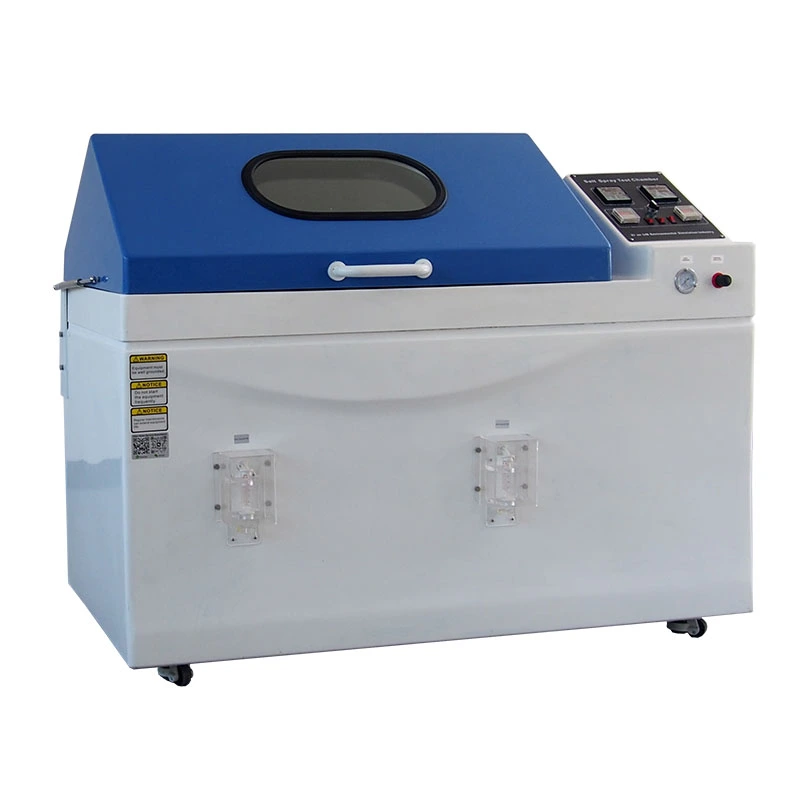
Electronics corrosion testing with salt spray test chambers provides manufacturers a controlled, repeatable method to evaluate how circuit boards, connectors, enclosures, and soldered joints withstand salt-laden atmospheric exposure over time. A salt spray test chamber generates a fine saline mist - typically a 5% sodium chloride solution - at elevated temperature and humidity, accelerating corrosion processes that would otherwise take months or years in the field. By subjecting electronic assemblies to these aggressive conditions inside a laboratory environment, engineers identify vulnerable materials, weak plating finishes, and inadequate conformal coatings before products ship to customers. This testing approach aligns with internationally recognized standards such as ASTM B117 and ISO 9227, giving electronics manufacturers the corrosion performance data essential for reliability assurance.

How Salt Exposure Affects Electronic Components and Assemblies?
Ionic Contamination on Printed Circuit Boards
Salt deposits introduce chloride ions onto PCB surfaces, creating conductive pathways between traces and pads. Even microscopic salt residue can lower surface insulation resistance, triggering parasitic leakage currents that degrade signal integrity and increase power consumption in sensitive analog and digital circuits operating in coastal or maritime environments.
Degradation of Solder Joints and Terminations
Chloride-rich moisture films attack tin-lead and lead-free solder alloys at their grain boundaries. This intergranular penetration weakens mechanical adhesion between components and pads, raising the risk of intermittent open circuits - a failure mode notoriously difficult to diagnose during field service without specialized inspection equipment.
Enclosure and Connector Vulnerability
Metal housings, EMI shields, and pin-and-socket connectors exposed to salt aerosol develop oxide and hydroxide layers that increase contact resistance. Corroded connector interfaces generate voltage drops and signal reflections, particularly problematic in high-frequency RF assemblies and power distribution modules where stable electrical contact is non-negotiable.
Common Corrosion Mechanisms in Electronic Devices
|
Corrosion Mechanism |
Affected Components |
Visible Indicators |
|
Galvanic Corrosion |
Dissimilar metal junctions, mixed-metal connectors |
White or green deposits at metal interfaces |
|
Electrochemical Migration |
PCB traces, BGA pads, fine-pitch leads |
Dendritic growths bridging conductors |
|
Pitting Corrosion |
Aluminum enclosures, stainless steel hardware |
Localized cavities beneath oxide layers |
|
Crevice Corrosion |
Gasket seats, overlapping sheet metal joints |
Rust streaks emanating from hidden gaps |
|
Filiform Corrosion |
Coated aluminum and steel panels |
Thread-like blisters under paint or lacquer |
Galvanic Corrosion at Dissimilar Metal Interfaces
When two metals with differing electrochemical potentials contact each other in a salt-moisture electrolyte, the more anodic metal corrodes preferentially. This phenomenon is commonly evaluated in a salt fog test chamber, where controlled saline environments accelerate corrosion reactions. In electronics, this commonly occurs where copper traces meet aluminum heat sinks or where tin-plated connectors mate with gold-plated contacts, accelerating material loss at the junction.
Electrochemical Migration and Dendritic Growth
Under bias voltage and in the presence of ionic moisture films, metal ions migrate from anode to cathode along PCB surfaces, forming conductive dendrites. These metallic filaments can bridge adjacent traces within hours inside a salt spray test chamber, replicating a failure mode that takes weeks or months in humid coastal installations.
Crevice and Filiform Corrosion in Sealed Assemblies
Tight geometries - beneath gaskets, within overlapping flanges, and under adhesive bonds - trap salt solution and create oxygen-depleted zones. The resulting differential aeration cell drives aggressive localized attack that compromises enclosure integrity, often invisible during external visual inspection until leakage or electrical failure occurs.
Salt Spray Test Requirements for Electronics Reliability
ASTM B117 and ISO 9227 Protocol Essentials
ASTM B117 and ISO 9227 define the baseline neutral salt spray (NSS) test: a 5% NaCl solution atomized at 35°C inside a salt spray test machine, with a fog deposition rate of 1–2 mL per 80 cm² per hour. Electronics manufacturers typically expose samples for durations ranging from 24 to 1000 hours depending on the intended service environment and coating specification requirements.
Industry-Specific Duration and Acceptance Criteria
Automotive electronics standards like GMW 14872 and Ford CETP 00.00-L-467 incorporate salt spray cycles within broader cyclic corrosion test sequences. Aerospace specifications such as MIL-STD-810H Method 509 prescribe salt fog exposure followed by drying phases to replicate flight-deck and carrier-deck conditions more realistically than continuous spray alone.
Chamber Performance Parameters That Matter
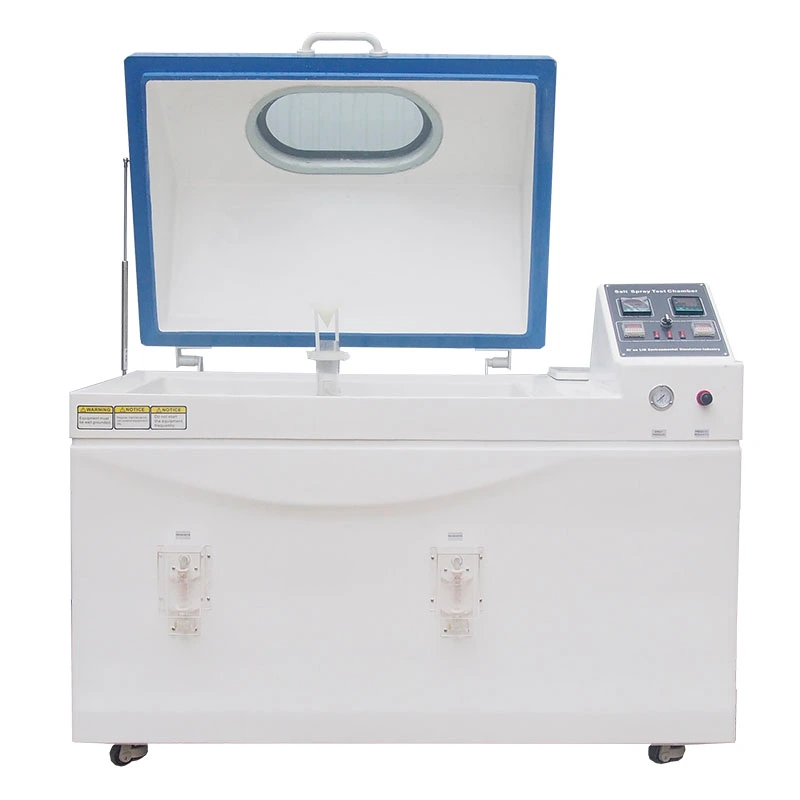
Reliable test outcomes depend on tight control of chamber temperature (±0.5°C fluctuation), humidity (95%-98% RH), and spray uniformity. The chamber material itself - glass fiber reinforced plastics in LIB Industry salt spray test machine - must resist the corrosive test environment to maintain calibration accuracy and structural integrity across thousands of operating hours.
|
Test Parameter |
ASTM B117 / ISO 9227 Requirement |
LIB Industry Chamber Capability |
|
Solution Concentration |
5% NaCl (±1%) |
Adjustable; precision dosing system |
|
Chamber Temperature |
35°C ± 2°C |
Ambient to +60°C; ±0.5°C fluctuation |
|
Humidity |
95%-98% RH |
95%-98% RH maintained |
|
Fog Deposition Rate |
1-2 mL / 80 cm² · h |
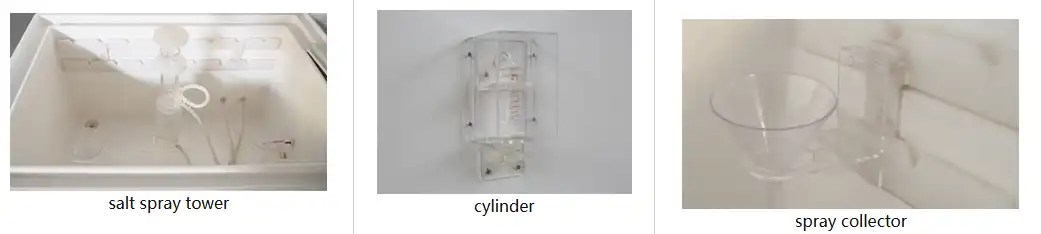
Calibrated fog collectors included |
|
Spray Mode |
Continuous or periodic |
Continuous / Periodic selectable |
|
Controller |
- |
PID with multi-language interface |
Combined Salt Spray and Environmental Stress Testing
Integrating Thermal Cycling with Salt Fog Exposure
Cyclic corrosion test protocols alternate salt spray phases with temperature excursions - often ranging from −40°C to +60°C - to stress coating adhesion and solder joint reliability simultaneously. Thermal expansion mismatches open micro-cracks that salt solution then penetrates, revealing synergistic failure modes invisible under isothermal salt spray alone.
Humidity and Condensation Cycling Sequences
Many automotive and industrial electronics standards insert high-humidity condensation phases between salt fog stages. These wet-dry transitions replicate diurnal moisture cycles and drive electrochemical migration more aggressively than constant humidity, providing a more realistic approximation of outdoor electronic enclosure conditions.
Vibration and Mechanical Stress Interactions
Salt-corroded solder joints and fasteners exhibit reduced fatigue life when subjected to mechanical vibration. Progressive test programs expose samples to salt spray, dry them, and then apply vibration profiles on a shaker table. This sequential approach uncovers latent corrosion-weakened interfaces that pass vibration testing alone but fail under combined environmental loads.
Using Corrosion Test Data to Improve Electronic Design
Material Selection and Plating Specification Refinement
Salt spray test results guide engineers toward corrosion-resistant alloys, optimal plating thicknesses, and compatible metal pairings. When nickel-plated connectors outperform tin-plated alternatives by a factor of ten in hours-to-first-corrosion, the data justifies the added plating cost and steers procurement decisions toward longer-lasting components.
Conformal Coating and Potting Compound Validation
Acrylic, silicone, polyurethane, and parylene conformal coatings each exhibit distinct salt spray endurance profiles. Chamber testing at controlled deposition rates allows coating engineers to compare adhesion retention, blister resistance, and insulation preservation across formulations - generating quantitative selection criteria rather than relying on supplier datasheets alone.
Design-for-Reliability Feedback Loops
When corrosion test failures concentrate at specific board regions or connector interfaces, design teams can modify trace spacing, add drainage features to enclosures, or relocate vulnerable components away from moisture ingress points. Each design revision cycles back through the salt spray chamber for validation, tightening the feedback loop between testing and product improvement.
Detect Component Failures Early with LIB Industry Salt Spray Test Chambers
A Full Range of Chamber Capacities
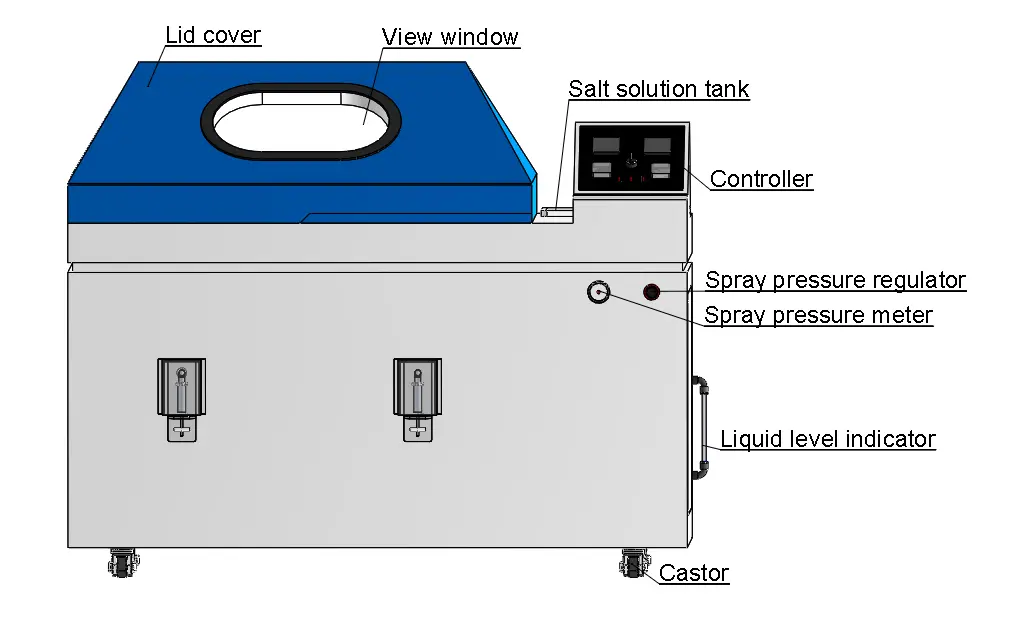
LIB Industry offers salt fog chambers in capacities from 110 L to 1600 L and beyond, accommodating everything from individual connector samples to fully assembled electronic control units. Models S-150 through S-020 cover internal volumes and dimensions suited to prototyping labs and high-throughput production quality departments alike.
|
Model |
Internal Dimensions (mm) |
Volume (L) |
Suited For |
  |
|
S-150 |
590 × 470 × 400 |
110 |
Small components, connectors |
|
|
S-250 |
1000 × 640 × 500 |
320 |
PCB assemblies, sensors |
|
|
S-750 |
1100 × 750 × 500 |
410 |
Mid-size enclosures, modules |
|
|
S-010 |
1000 × 1300 × 600 |
780 |
Full electronic housings |
|
|
S-016 |
900 × 1600 × 720 |
1030 |
Automotive ECU racks |
|
|
S-020 |
1000 × 2000 × 800 |
1600 |
Large assemblies, panels |
Precision Controls and Safety Architecture
Every LIB chamber features a PID control system with a multi-language interface (English, French, Spanish, German, Russian) and network connectivity for remote monitoring. Comprehensive safety devices - including over-temperature protection, over-current protection, water shortage alarms, and earth leakage safeguards - ensure uninterrupted long-duration tests without operator intervention.
Turnkey Delivery from Concept to Commissioning
LIB Industry delivers a complete turnkey solution encompassing research, design, manufacturing, commissioning, installation, and operator training. Whether you need a standard ASTM B117-compliant chamber or a customized cyclic corrosion system with integrated drying and humidity phases, every unit ships configured to match your specific electronics testing protocols and facility requirements.
Conclusion
Salt spray chambers remain an indispensable tool for electronics manufacturers seeking to quantify and mitigate corrosion risk across their product portfolios. By replicating aggressive salt-laden atmospheres under tightly controlled temperature and humidity conditions, these chambers expose material weaknesses, plating deficiencies, and sealing failures far faster than natural exposure. Combining salt fog data with thermal cycling, humidity, and vibration results yields a comprehensive reliability profile that strengthens design decisions and reduces field returns. Investing in a well-engineered corrosion test chamber pays dividends in product longevity, customer confidence, and reduced warranty liability throughout the electronics supply chain.
FAQ
What salt concentration does a standard salt spray test chamber use for electronics testing?
The standard neutral salt spray test per ASTM B117 and ISO 9227 uses a 5% sodium chloride solution atomized at 35°C, providing a consistent and reproducible corrosive environment for evaluating electronic components.
How long should electronics be exposed inside a salt spray chamber?
Exposure durations range from 24 hours for basic screening to 1000 hours or more for high-reliability applications, depending on the target industry standard and the severity of the intended service environment.
Can a salt spray test chamber perform cyclic corrosion testing?
Many chambers support periodic spray modes alongside continuous operation, and when integrated with thermal and humidity cycling equipment, they enable comprehensive cyclic corrosion protocols required by automotive and aerospace standards.
Looking for a reliable salt spray test chamber manufacturer and supplier? LIB Industry provides turnkey corrosion testing solutions - from design and production to installation and training - tailored to your electronics reliability needs. Reach out at ellen@lib-industry.com to get started.